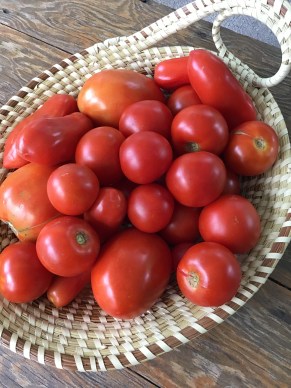
Most of us can agree that fresh garden tomatoes are one of the gifts of summer. Personally, I’m happy eating them warm from the garden, a tomato in one hand, the the salt shaker in the other. However, the cook in me knows there is so much more to do with summer’s best crop: sauce, roasted on the side, chopped for bruschetta. And then there is tomato pie or tart. This year I’m trying to take my tomato repertoire up a notch.
For some time now I have been eyeing various recipes for tomato tarts. They’re pretty and colorful, and seem like they would make a nice summertime appetizer, first course or side. And last week I needed a new kitchen project anyway.
Our garden tomatoes are just now ripening (this is Chicago, after all), so I supplemented with tomatoes from the store to test these recipes. My first try was this tomato tart from the New York Times. I have been having great luck with their recipes lately and this was no exception. The recipe called for heirloom tomatoes, but my grocery store didn’t have a good selection, so I settled for a smaller vine ripened variety.
This recipe starts with a fairly simple, blind-baked crust that is then topped with a thin layer of pesto (which I made myself from some of our garden basil), then mozzarella cheese topped by a simple egg and cream mix, then the tomatoes. We enjoyed this as a side with grilled chicken, but it could easily have been a light entree. It was certainly filling and fresh. Even my husband, who prefers his tomatoes in spaghetti sauce, endorsed it!
And I’m so sorry I didn’t take pictures along the way, but here’s the finished product. This recipe’s a keeper!

A few days later I made Ina Garten’s recipe for Anna’s Tomato Tart from Cooking for Jeffrey. This recipe has fewer layers, starting with a dough made in the food processor. After chilling the dough for about 30 minutes, giving you time to slice the tomatoes and prepare a seasoning mix of parsley, basil, thyme and olive oil (also using a food processor) it’s time to roll the dough into a rough 11 by 17 rectangle. It doesn’t need to be perfect, but it bakes in a sheet pan, so you want to achieve that general shape.
 After rolling the dough out on a floured surface and transferring to a parchment-lined sheet pan (per Ina’s instructions), I realized it would have been easier to roll it out on the parchment, then transfer the paper and dough to the pan. Next time. After baking the crust, it’s layered with a coat of dijon mustard, then grated gruyere cheese, then the sliced tomatoes tossed with the herb seasoning, more gruyere and a final dusting of parmesan. This all goes back into the oven to roast the tomatoes and melt the cheese. After cooling a bit, I cut it into squares and we ate it warm, though you could also serve it at room temperature. This was good, but very cheesy. As much as I like gruyere, I would use less next time.
This made a bigger recipe overall, so it may work better for a larger group. In the end, Steve and I decided we preferred the NYT recipe, but agreed that the Barefoot Contessa tart would be a fun — and different — party app. Bonus points since it doesn’t need to be served right out of the oven.
So, after all this tomato talk, what did I serve to friends who socially distanced with us over the weekend? Good old bruschetta. I used a carton of red, yellow and green cherry tomatoes — quartered — seasoned with minced garlic and onion, a dash of red wine vinegar and generous doses of salt and olive oil. I do this by taste. I used toasted baguette slices for serving and this time, to avoid too many hands on the food, I assembled them ahead of time, spreading a thin coat of ricotta (or you could use goat cheese or buratta) on the bread slices, before adding the tomatoes. In pre-pandemic times, I would have served the toasted bread in a basket and the tomatoes in a pretty bowl.
Which leads me to another question: if you are hosting the occasional guests in these pandemic times, what are you serving and how are you serving it? I did beef sliders and individual ramekins of potato salad a few weeks ago. And I pre-plated it to avoid too much handling. What are your thoughts?
Thanks for stopping by. See you again soon!
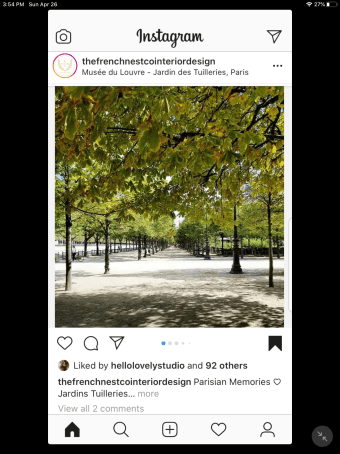 Armchair travels to Paris





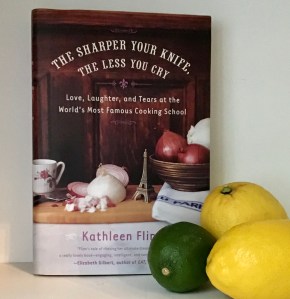 A funny thing happened on the way to writing this post…
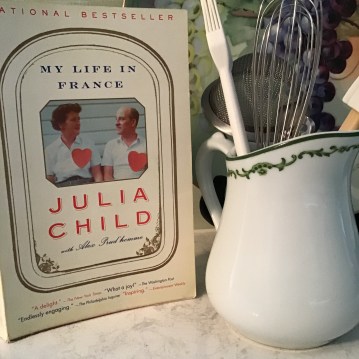 Long before Kathleen Flinn took on Le Cordon Bleu, there was Julia Child. My Life in France recounts Julia and Paul’s early move to France, her discovery of — and passion for — french cuisine and her cooking adventures before, during, and after (including her own time at Le Condon Bleu!). Of course there are recipes, but I really loved this book for the story it told about Julia and Paul. The book is largely based on letters written by Julia and Paul Child to his twin, Charles Child, grandfather of co-author Alex Prud’homme. Julia’s uniquely pitched and enthusiastic voice is everywhere in the book. Most of us think of her as the dynamo behind Mastering the Art of French Cooking, which many say brought french cooking to America, and the subsequent PBS series The French Chef, both wildly successful. But Julia and Paul weathered more than their fair share of personal and professional challenges along the way, and they too are part of the story.
 David Lebovitz is a former pastry chef, who spent 13 years in the restaurant fast lane at Alice Waters’ Chez Panisse before heading across the Atlantic to Paris. (Don’t they all?) He writes a dynamite
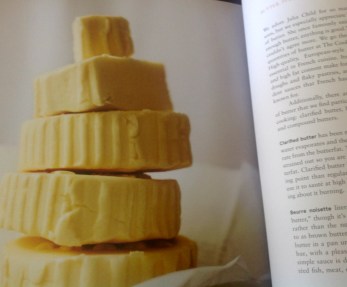
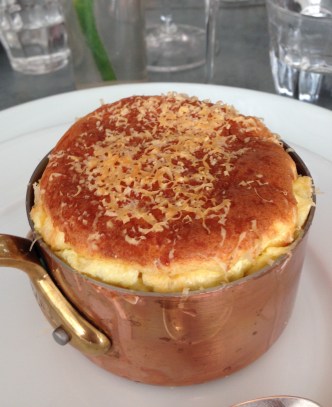
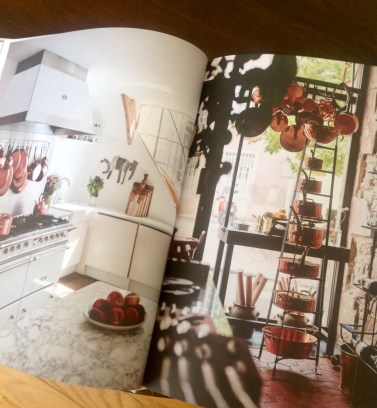
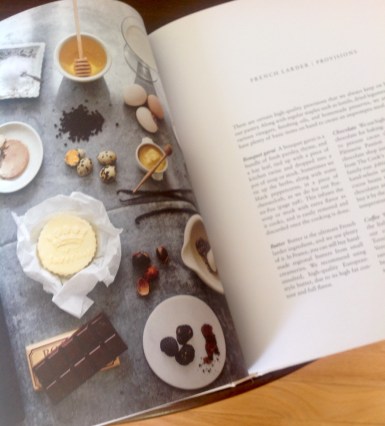
  Finally, I’m including The Cook’s Atelier by Marjorie Taylor and Kendall Smith Franchini. They think of it as a cookbook and I do too, but it’s also a coffee table book with it’s oversized, lush photos of the Burgundy countryside and their beautiful shop in Beaune, France. And then there is the story of how Marjorie ran a successful restaurant in Phoenix before following her daughter to France, and their search to build a successful family business around their Burgundian way of life in Beaune, and the business that grew and portraits of the farmers, shepherds, butchers and more that complete their picture. The atelier’s philosophy is built around seasonal cooking, and the recipes are arranged accordingly. for example, Spring Dinner in the Wine Shop includes White Asparagus with Hollandaise, Green Garlic Souffle, and Rustic Apricot Tart.


 This birthday cake
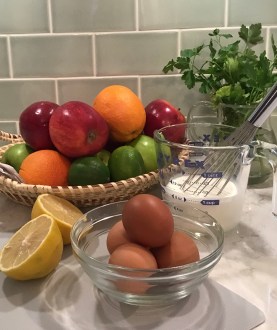 When in doubt, go old school. And when I’m talking about the kitchen, that does not mean giving up my dishwasher or microwave. However, I have had some small but useful cooking revelations lately and thought they would make an interesting post. Then, as I was writing, I realized I was also talking about bringing back old favorites — mac and cheese, pigs in a blanket, oatmeal. Nothing revolutionary or even trendy here, just some new/old ideas.
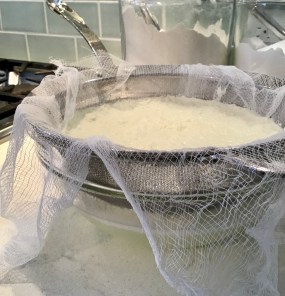 Ina Garten points out that of course you can buy ricotta, but it’s so easy to make, why not? I mentioned this to one of my foodie friends who happens to be an outstanding cook, and she said, “Oh, yes! Very easy and very good.” So I checked the Barefoot Contessa’s recipe: milk, cream, vinegar and salt. Yes, it is easy and really, really good. It takes maybe 40 minutes to make, incIuding 20-30 minutes of draining the liquid from the cheese (see photo, left). Plenty of time yo wash a few dishes, check your email or work on the current newspaper crossword.
 That’s what I’m calling my new favorite breakfast.
 Yesterday I made yet another batch of Ina Garten’s mac & cheese to deliver to a care-giving acquaintance and her family. (Does your church or neighborhood do this too? It’s thoughtful and practical, described by a recipient at our church as “love in a foil-covered pan.”) I was in a hurry to deliver my casserole hot, so I didn’t take a photo and am relying on this one from Ina’s Back to Basics cookbook. I added a large, veggie-packed salad to the dinner to balance the richness of the cheese (this recipe uses cheddar and gruyere) and the carbs in the mac. Bottom line: unless the recipient is on a limited diet, homemade mac & cheese is great comfort food and a nice change from the chili, lasagna and chicken soup often offered. And it freezes well, so you can make a batch (most recipes are pretty big) and divide it into two healthy portions in disposable foil pans and freeze. I’m trying to keep a few dishes like this in my freezer, so I have something tasty to share when someone needs a meal, which may or may not be when I have time to cook.

 I’m not sure who came up with the idea of Christmas in July, but I am not buying into it. Not the Hallmark movies, not the Christmas in July decorating blog posts, and definitely not the pre-, pre-season sale on artificial trees. And I have my reasons.
 Spring can’t come soon enough.
  When I look back at what I have done lately, most of it has been centered on coping with cabin fever. First, of course, I read. Pachinko by Min Jin Lee was a book club read and, like so many of them, it pushed my typical reading choices. This multigenerational story about Koreans living in Japan (where they were viewed as second class citizens) recounts one woman’s life decision and the repercussions on her family for generations to come. I knew very little about the history of either country, so this was especially eye-opening for me. Pachinko was a little tough starting, but ultimately a compelling read.
 In fact, I cooked so much I had to start passing out “samples.” I made Ina Garten’s Winter Vegetable Soup twice in one week. It was just that good! I made the first batch per all of her instructions, minus the pesto which I did not have. The second time, I tweaked the recipe a bit, substituting potato for some of the squash. It was just as good! (I did take Ina’s suggestion to use homemade chicken stock, and I do think it makes a huge difference!)
 fun for all of us. But it also resulted in a lot of photos. I’m really drowning in prints, often multiples of the same image (though I am increasingly successful at weeding those out!).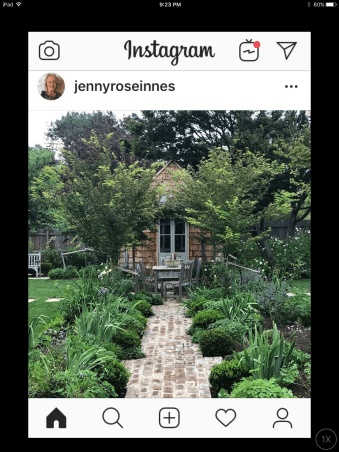



 It’s been hot. I’ve been bored. The blog post I’ve been planning just isn’t coming together. Like a kid getting sidetracked from a deadline on a school project, I find I’m easily distracted. And so this is what I’ve been up to.
 This sauce was delicious, easy, and so fresh!! I served it with penne, some meatballs from the freezer, and beans from Steve’s garden. Next, I want to try it with homemade meatballs and polenta, a fairly hearty appetizer we sometimes share at a local restaurant. I’ve been thinking that a slightly larger serving of meatballs and a vegetable on the side could turn that appetizer into an entree.
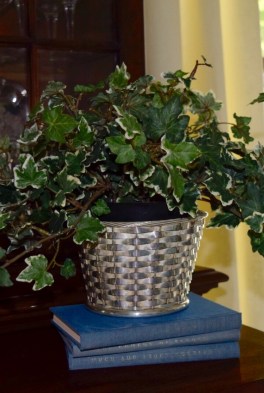 It is especially effective with this woven silver basket. (Yes, I also polished some silver.) This was a wedding gift from a special friend in my earliest basket-collecting career. It’s a challenge to clean, so briefly dipping it in this bath has been a lifesaver. My basket used to make appearances on only the most special occasions; now it hangs out on the coffee table or a side table all the time!
 I think I already shared with you that recently one of my reading groups discussed Katherine Graham’s autobiography, Personal History. We had all loved “The Post” with Meryl Streep and Tom Hanks and wanted to learn more about Kay Graham. We came away impressed with what Graham accomplished, especially with regard to the Pentagon Papers and Watergate. Her father owned the Washington Post and turned it over to her husband, Philip Graham. Kay took over when Phil died unexpectedly. She make it profitable for the first time, stuck to the Post’s editorial principles and drove two of the most significant stories in the 1960’s and 70’s, making it one of the most powerful and respected papers in the country.
 If you follow me on Instagram. you already know how excited I was when my copy of The Cook’s Atelier Cookbook arrived. The Cook’s Atelier is the cooking school I attended last spring in Beaune, France. I wrote about the one-day workshop,




 Ivy & Ironstone