
On the heels of my recent soapbox rant, I want to thank all of you who read and commented on my last post. I’m sure I’ve said this before, but although I am reluctant to engage in much political banter here (I am quite good at it in person), I think of gun control as a moral issue. It’s not politics; it’s just wrong to expose our children, families, neighbors and everyone else to this danger.
Following up
I should have offered some follow-up options and I failed to do so. Like me, you may live in a state or congressional district that does not support these efforts, but these organizations are working hard to make change. They deserve our support. You may want to consider offering even modest support to Everytown for Gun Safety, Moms Demand Action or The Giffords Law Center to Prevent Gun Violence .
Extravagant Welcomes
I recently joined a church I have been attending for several months. Along the way, one of the pastors had been assuring me that there was no pressure for me to join, but when I did she could promise an “extravagant welcome.” I joined recently with eight or so others and we were warmly, extravagantly, welcomed with hearty handshakes, words of welcome, and a reception (with cake!).
I love the term “extravagant welcome” which I interpret to mean sincere and heartfelt. It has nothing to do with money, and everything to do with a generous spirit. It should become a regular practice. Making people welcome goes beyond our home. As a newbie in my community, feeling welcome is something with which I am increasingly acquainted. We need to enthusiastically welcome the newcomer to our exercise class or book group, to our golf league or pickle ball team. Ask their name if you didn’t catch it (or worse, if it wasn’t offered), tell them you’re glad to see them, ask how they heard about this activity, etc. The day we moved into this house, our next door neighbors stopped by to say they were going to pick up sandwiches at Subway and what would we like? That was an extravagant welcome.
As I mulled over the importance of an extravagant welcome, I realized that it may be especially important after the isolation of the pandemic. A few weeks ago one of my book groups discussed Elizabeth Strout’s Lucy by the Sea. Strout has an engaging way of writing more than one book about a character. She has written about Lucy before and about Lucy’s former husband, William, who is also a main character in this book. Like many of us, Lucy initially views the pandemic as an inconvenience that she expects will last a few weeks or maybe a month. William is a scientist and understands from the beginning just how serious the threat is and how important it is to get Lucy and their adult daughters out of New York.
Our discussion bounced between our own experiences with the pandemic and how we viewed the book. Some readers felt the book was boring, but then others pointed out that the pandemic was boring and Strout really captured that in her writing. But the big take-away from the discussion was how fresh and even raw our feelings were about the pandemic. It’s still on many minds, it’s changed us in many ways, and the effects will linger.
And if we are all a little raw or bruised post pandemic, perhaps even coping with significant losses, extravagant welcomes are especially important right now.
What do you think? Am I on to something?
Thanks for stopping by; see you again soon.

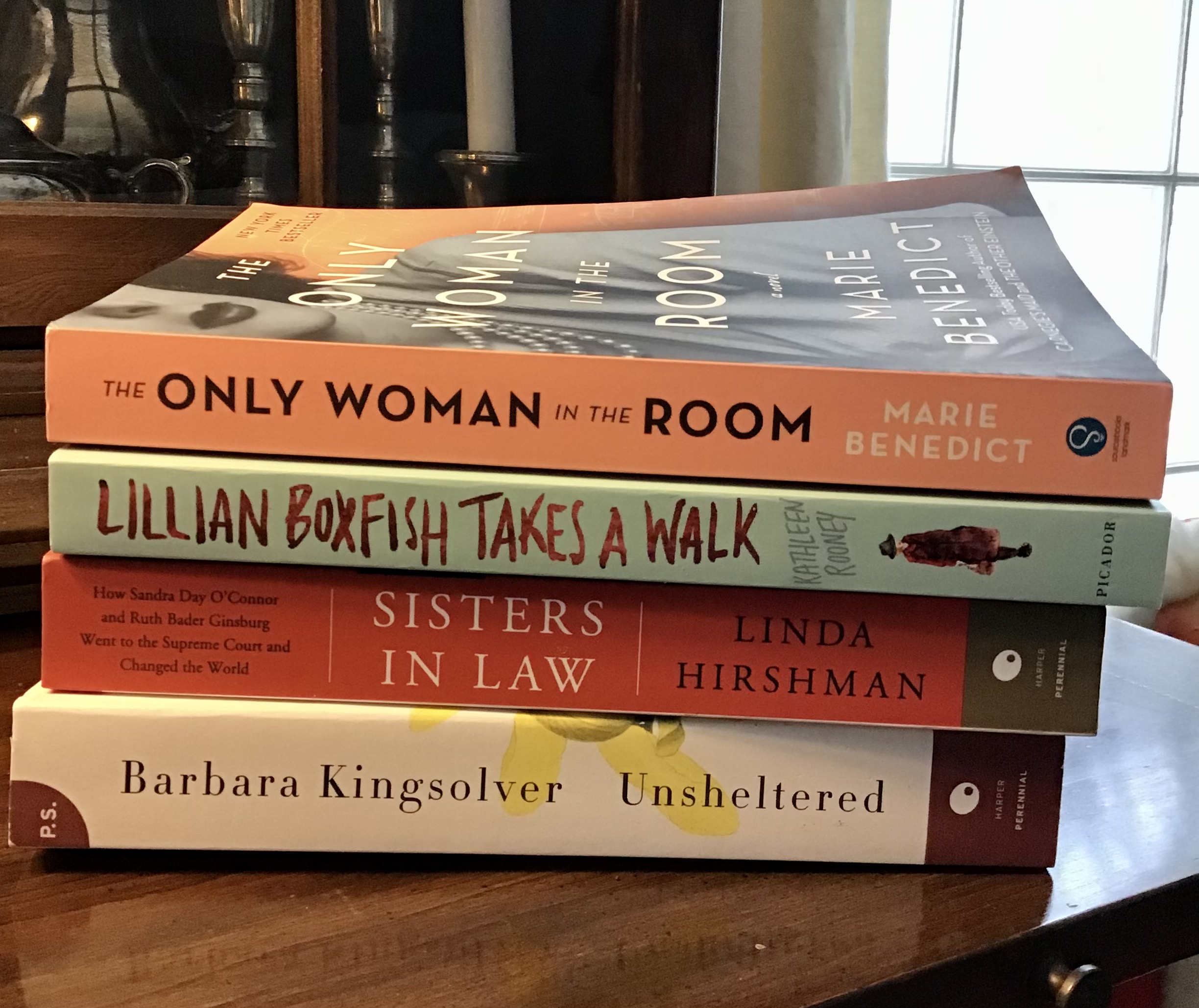
 Since my posts about books generate so many comments from you, my readers, I thought I would share at least some of the latest reading list my book group generated for August thru next July. This isn’t the complete list — just a “teaser.”


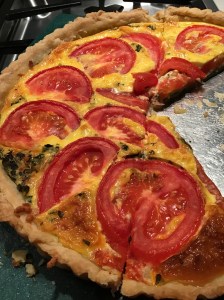
 After rolling the dough out on a floured surface and transferring to a parchment-lined sheet pan (per Ina’s instructions), I realized it would have been easier to roll it out on the parchment, then transfer the paper and dough to the pan. Next time. After baking the crust, it’s layered with a coat of dijon mustard, then grated gruyere cheese, then the sliced tomatoes tossed with the herb seasoning, more gruyere and a final dusting of parmesan. This all goes back into the oven to roast the tomatoes and melt the cheese. After cooling a bit, I cut it into squares and we ate it warm, though you could also serve it at room temperature. This was good, but very cheesy. As much as I like gruyere, I would use less next time.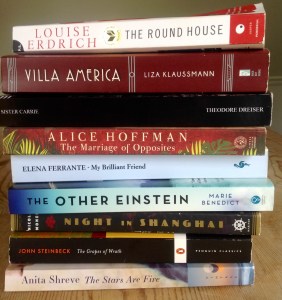
 I was writing a lighthearted post when the coronavirus death toll passed 100,000. And while l was trying to wrap my head around that number, one man died on the street in Minneapolis. You know the rest. These have been terrible days and weeks. I am so sad about what’s happened, but also hopeful we meet this challenge. It will take a lot of work. I especially hope you are well. Personally, I just felt numb for a while. Here’s what I’ve been doing to get back on track.
 Our cooking adventures continue. Earlier this week I made steak fajitas from scratch using a recipe from the New York Times (My new favorite recipe source. I encourage you to sign up for their newsletter.). First, this recipe was much easier than I expected and required standard ingredients from my kitchen. Who knew? The fajitas tasted even better than they look. (I should have tidied that serving board before snapping any photos.)



 How are you doing? Isolation is hard, but I honestly can’t complain. We’re healthy and so is our family. Right now, that’s everything.
  On Friday my book group met via Zoom to discuss The Lake is on Fire by Rosellen Brown. Fifteen of us logged on to talk, check in with each other, share a few war stories about life in a time of social distancing, and then realized we really could not talk all at once. (This happens even when we meet in person!)
 Ivy & Ironstone