
What do chicken stock, WWI spies and a place to hang your hat have in common? They’re all part of filling long winter days. But, hey, it’s officially spring on the calendar, so pour a cup of coffee or make a cup of tea and see what I’ve been up to lately.
Books to beat the cold
When we landed here in Ohio, I found two bookclubs! Rather than play favorites, I jumped into both. One is composed of residents in my over-55 community and the other is more well-established and draws its members from the senior community in New Albany. My husband thinks I may have bit off more than I can chew keeping up with two different book clubs, but both groups are reading such great material, it’s been worth the effort. And sometimes their interests collide:tast fall both clubs read Lessons in Chemistry, a bonus discussion for me.
Last week the New Albany group discussed The Lilac Girls. It’s been a book club favorite since its release a few years ago. I started it sometime back, then put it down. I’m so glad I had an incentive to get back to it. This is a powerful — sometimes gritty — true story of women spies in WWI. Sadly, it’s one of those chapters left out of most history books, but still so important to ur understanding of history. The books ahead are certainly promising: Lucy by the Sea by Elizabeth Strout in April and The Mosquito Bowl by Buzz Bissinger in May. My other book group will be discussing Demon Copperhead by Barbara Kingsolver at the end of the month. I read it and loved it, so I’m really looking forward to that too.
(If you’re new here or if you haven’t been a regular visitor, learn more about my recent reads here, here, and here.)
Making stock to fit the pot

If you have cooked any Ina Garten recipes, you know that if it calls for stock Ina always recommends homemade. Several years ago when I was trying to replicate a roasted squash soup, I decided to take Ina’s advice and make my own stock. It turns out that stock is pretty easy to make and really handy to have in the freezer. (By the way, I refer to it as stock because I use bones, but it may be just broth.)
I don’t have a huge stock pot; I use a multi-pot from Williams Sonoma and it holds eight quarts,. Frankly I’ve adapted the Barefoot Contessa recipe to fit my pot. I save and freeze the leftover bones or carcass from bone-in breasts or broasted chickens. (We eat a lot of chicken!) I just throw them into a plastic bag in the freezer until I’m ready to cook. To make the stock I start with the bones from the freezer, than add 3 or 4 carrots, halved with the ends trimmed, three or four stalks of celery trimmed the same way (the leafy heart of the celery is also a nice addition), then a parsnip with the ends trimmed like the carrots, a medium to large onion, unpeeled and halved, a head of unpeeled garlic cut crosswise, several sprigs each of fresh parsley, dill and thyme, and about a tablespoon of whole pepper corns and another tablespoon of kosher salt. (I try not to overdo the salt & pepper, since the broth will get seasoned again when it’s used in a recipe).
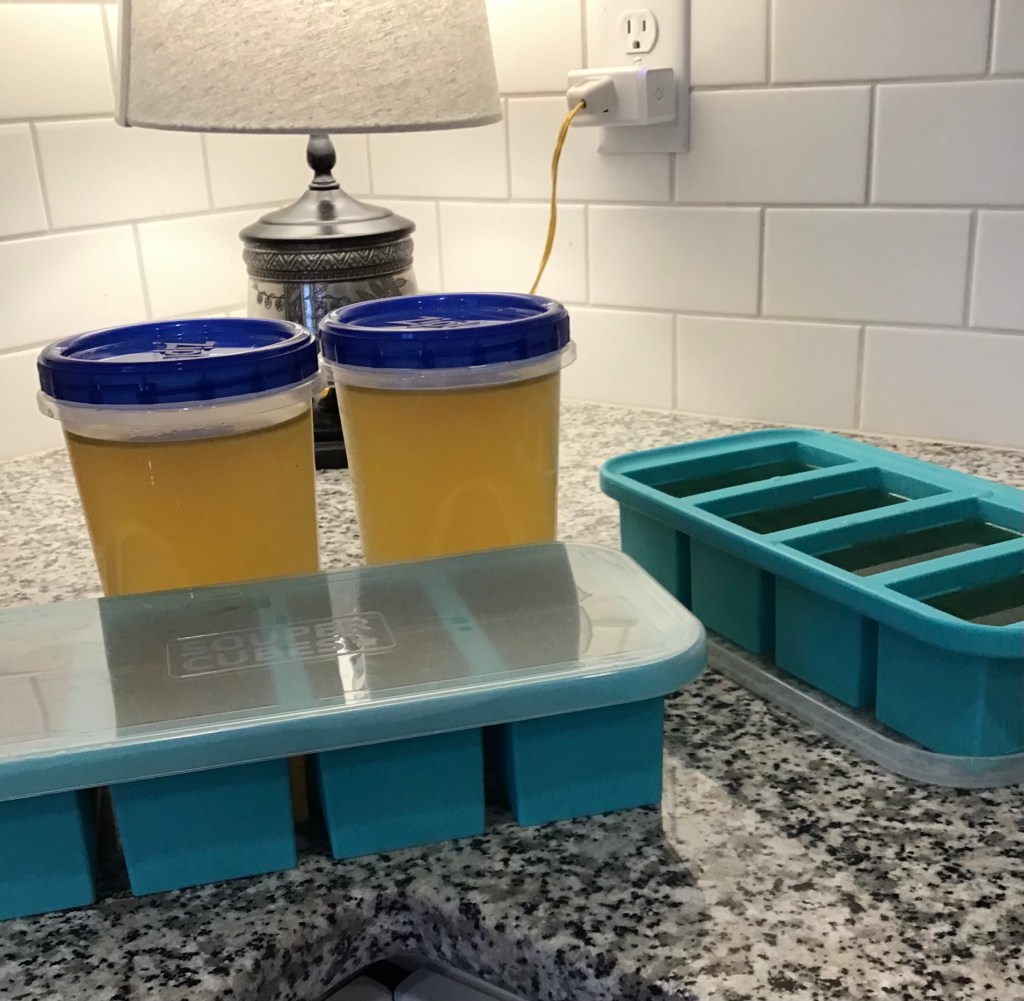
And that’s it, that’s what fits in my pot. If I don’t have enough bones I will add some uncooked chicken thighs, but then I discard the meat with the bones, because to me it’s really overcooked. Finally I add 4 to 6 quarts of water, really what my pot can hold, and bring it all to a boil before reducing it to simmer for a few hours. Wen it’s done, I take the pot off the heat and use tongs to transfer the solids to a colander set in a large bowl to drain. With the solids out of the way, I use a fine sieve to strain the broth into freezer containers.
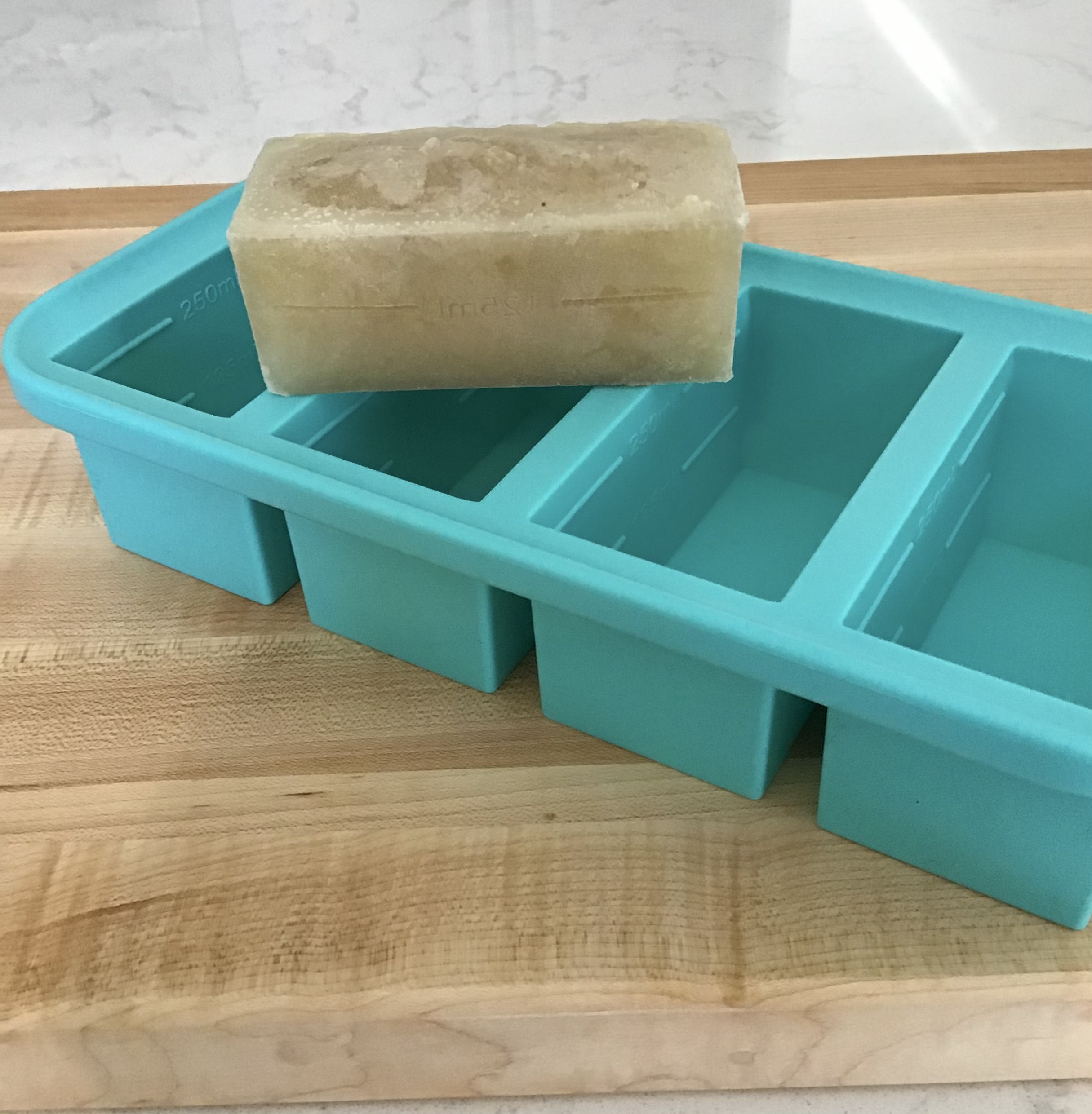
This is so easy. It takes me about 10 minutes to assemble and after two hours of simmering another 20 minutes to strain and package for freezing. I feel totally virtuous when I have all this broth tucked away in the freezer. My daughter-in-law capitalized on that when she bought me these silicone “soup cubes.” Each cube holds a cup of stock, perfect for portioning smaller amounts for recipes. I freeze the stock in the silicone cubes, then pop the frozen stock cubes into a plastic bag to keep in the freezer.
Look what’s new at the Reset

One of my new neighbors asked one day if I was about “done ” here at the Reset. After all, we hung pictures, even painted a wall and installed all that trim. She doesn’t know me at all yet or she would know I never stop tweaking.
And, okay, it would be fine to stop there, but we haven’t. In fact, we recently finished two additional projects that we both thought added a lot to the house. First, this mudroom space inside the garage door was begging for some storage for hats and scarves, a place to put packages, and so much more. Plus, it’s open to the entry and the library. It needed a “look” instead of looking like an afterthought.
The solution: My husband added headboard against the wall and built a fairly simple bench and we love the result! This “built-in” was a builder option that was not added to our spec house. I know I could have ordered a piece of furniture to do the same thing, but this was pretty straightforward, and I’m sure it was much less expensive for the same look.
A custom closet has long been on my wish list (I think this is true for a lot of us), so when I realized we had received a substantial discount from The Container Store as part of a welcome packet from the builder, lights started going off in my head. Our master closet is pretty generous, but the interior was just a single shelf and clothes rod — a total of 19 feet — running around the closet perimeter. As my daughter said, “a lot of wasted space.”
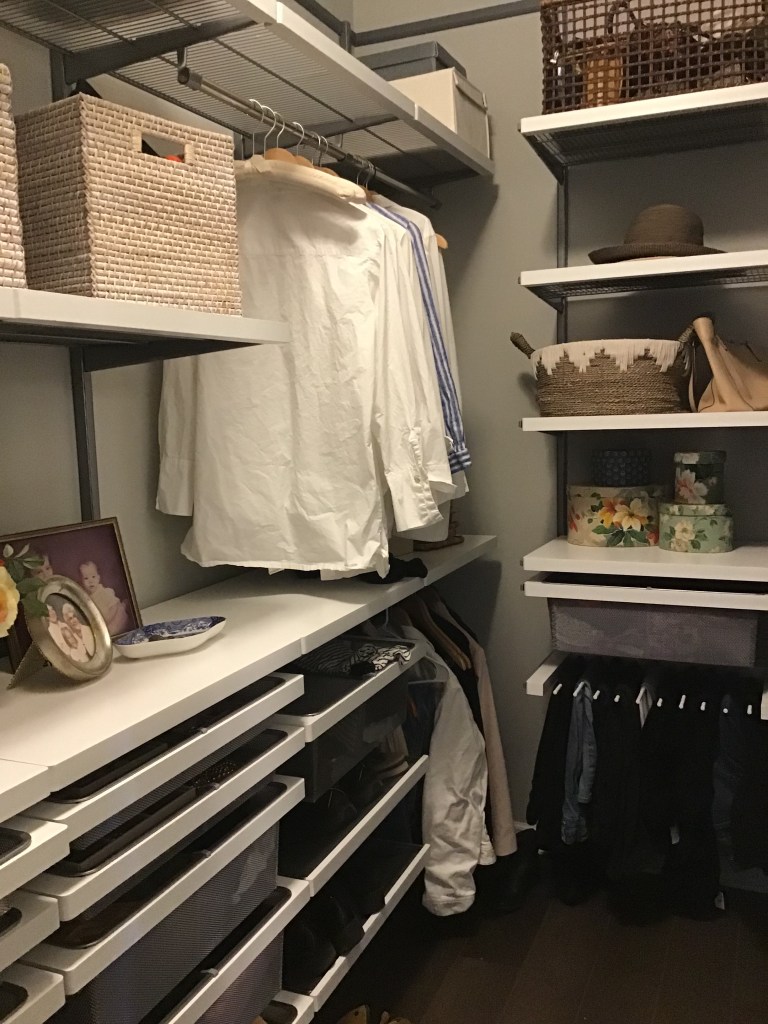
So, we measured the space and talked to the closet designers at The Container Store, and in fact went back and forth with them a few times tweaking the plan. They were terrific.. We eventually landed on a really workable design, but then kind of sat on the plan. We were caught up in other, more pressing projects, and, frankly, even with the coupon it was still pricey. Then came an even better sale. So, yes, we did it, installing it ourselves. Here’s a quick look at how that turned out. We love it! Our clothes are neatly stored, the floor is clear (my goal!) and we have storage space to to spare! I’ll share more details on this in a later post too, since we learned a few important points in doing this.
Thanks for reading to the end of this meandering post. Waiting for spring to finally arrive is always a challenge for me. I’m always pushing the calendar. How about you? I’d love to hear how you are waiting on spring.
Thank you so much for stopping by. See you again soon!




 How are you & how’s your week? It’s chilly and rainy here in Chicagoland, with the potential for snowflakesI I was working on a couple of posts, then realized I could just mash them into one. Hopefully a little something for everyone. Here for your reading pleasure are books, looks, cooks and gardens all in one! Enjoy!
 For years I made the most basic pancakes and waffles — you can do just about anything with that box of mix, right? My husband, however, really likes french toast. His is pretty basic: sandwich bread dipped in beaten eggs and grilled. I just never saw (or tasted) the charm. However, our annual beach trips have always included at least one trip to a breakfast buffet I would describe as breakfast nirvana — chafing dishes of bacon, sausage, grits, potatoes, waffles, pancakes or — wait for it — french toast. This is thick, flavorful french toast, much more than eggs and bread. Earlier this spring, when my husband and I had way too much time on our hands and were hanging around the house waiting for vaccinations, we went on a quest for french toast perfection.
 The bread is essential. We tried an unsliced white country-style loaf that we could slice thicker. It was good, but I thought the bread should contribute more flavor. Next we tried a brioche, again in a loaf we sliced. This was too soft (maybe I should have let it sit for a few more days?). It did not hold up well to eggs or grilling. Finally, I found an unsliced challah loaf. This was our favorite, although I think it should also age for a day or so.
 As a cook, I enjoyed making this a few times in quick succession, tweaking the recipe until I had something I was willing to serve friends and family. But, let’s face it, this was a decadent experiment. We only added the bacon and fruit on the last try and each time we made this it was more brunch than breakfast. We used 4 eggs and 3/4 C of cream to make 6 slices, two of which we never touched.


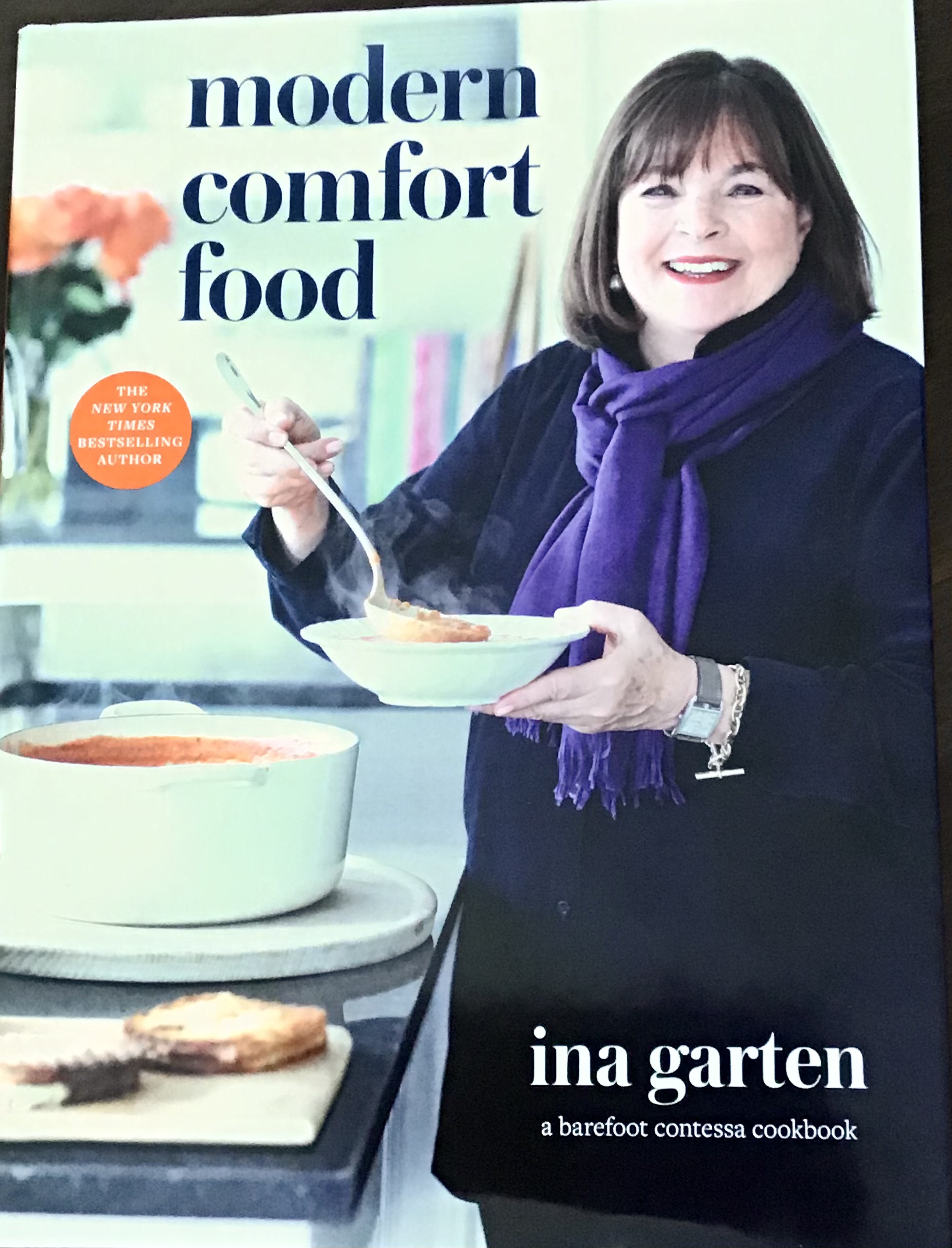

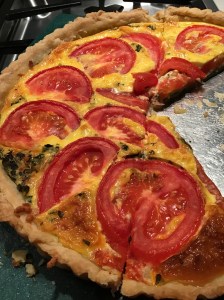
 After rolling the dough out on a floured surface and transferring to a parchment-lined sheet pan (per Ina’s instructions), I realized it would have been easier to roll it out on the parchment, then transfer the paper and dough to the pan. Next time. After baking the crust, it’s layered with a coat of dijon mustard, then grated gruyere cheese, then the sliced tomatoes tossed with the herb seasoning, more gruyere and a final dusting of parmesan. This all goes back into the oven to roast the tomatoes and melt the cheese. After cooling a bit, I cut it into squares and we ate it warm, though you could also serve it at room temperature. This was good, but very cheesy. As much as I like gruyere, I would use less next time.
 I was writing a lighthearted post when the coronavirus death toll passed 100,000. And while l was trying to wrap my head around that number, one man died on the street in Minneapolis. You know the rest. These have been terrible days and weeks. I am so sad about what’s happened, but also hopeful we meet this challenge. It will take a lot of work. I especially hope you are well. Personally, I just felt numb for a while. Here’s what I’ve been doing to get back on track.
 Our cooking adventures continue. Earlier this week I made steak fajitas from scratch using a recipe from the New York Times (My new favorite recipe source. I encourage you to sign up for their newsletter.). First, this recipe was much easier than I expected and required standard ingredients from my kitchen. Who knew? The fajitas tasted even better than they look. (I should have tidied that serving board before snapping any photos.)


 A funny thing happened on the way to writing this post…
 Long before Kathleen Flinn took on Le Cordon Bleu, there was Julia Child. My Life in France recounts Julia and Paul’s early move to France, her discovery of — and passion for — french cuisine and her cooking adventures before, during, and after (including her own time at Le Condon Bleu!). Of course there are recipes, but I really loved this book for the story it told about Julia and Paul. The book is largely based on letters written by Julia and Paul Child to his twin, Charles Child, grandfather of co-author Alex Prud’homme. Julia’s uniquely pitched and enthusiastic voice is everywhere in the book. Most of us think of her as the dynamo behind Mastering the Art of French Cooking, which many say brought french cooking to America, and the subsequent PBS series The French Chef, both wildly successful. But Julia and Paul weathered more than their fair share of personal and professional challenges along the way, and they too are part of the story.
 David Lebovitz is a former pastry chef, who spent 13 years in the restaurant fast lane at Alice Waters’ Chez Panisse before heading across the Atlantic to Paris. (Don’t they all?) He writes a dynamite
 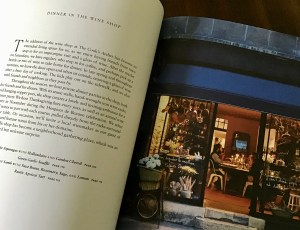 Finally, I’m including The Cook’s Atelier by Marjorie Taylor and Kendall Smith Franchini. They think of it as a cookbook and I do too, but it’s also a coffee table book with it’s oversized, lush photos of the Burgundy countryside and their beautiful shop in Beaune, France. And then there is the story of how Marjorie ran a successful restaurant in Phoenix before following her daughter to France, and their search to build a successful family business around their Burgundian way of life in Beaune, and the business that grew and portraits of the farmers, shepherds, butchers and more that complete their picture. The atelier’s philosophy is built around seasonal cooking, and the recipes are arranged accordingly. for example, Spring Dinner in the Wine Shop includes White Asparagus with Hollandaise, Green Garlic Souffle, and Rustic Apricot Tart.

 How are you doing? Isolation is hard, but I honestly can’t complain. We’re healthy and so is our family. Right now, that’s everything.
  On Friday my book group met via Zoom to discuss The Lake is on Fire by Rosellen Brown. Fifteen of us logged on to talk, check in with each other, share a few war stories about life in a time of social distancing, and then realized we really could not talk all at once. (This happens even when we meet in person!)
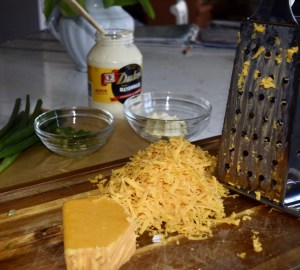 I don’t know about you but, but I’ve really needed to take a step back from the pandemic. Uncertainty is hard, and this is uncertainty on steroids. Not only is it reshaping our lives for the foreseeable future, but I think we can’t help but be somewhat changed when it’s over. I need a “news” break, so I’m heading for the kitchen where I think a lot of us have been hanging.

 Ivy & Ironstone