
Do we still call these the dog days of summer? It’s hot and dry. Our lawn looks a little crisp. My geraniums are big and blooming, but the day-lilies have more spent blooms than buds and the coneflowers seem “bleached.” There is a back-to-school buzz in the air.
August is a season all its own.
My husband’s vegetable garden has been producing some delicious corn (a first for us) and tomatoes. Then the park district called. (His vegetable plot is in a larger community garden.) It seems someone took a drive thru the garden plots. All of the remaining corn and half of Steve’s tomato plants were wrecked. What a mean-spirited stunt.
Other plots were damaged, no one will go hungry because of this, and there are far more heinous acts committed daily. But does it seem to you that there’s a mean streak in the air? Perhaps it’s time to go back and read “What I learned while standing in line.” It’s time for the better demons to strike back.
But, there are still tomatoes!
Decades ago Steve and I were presented with a few bushels of tomatoes from one of his co-workers who had a ridiculously prolific garden on his multi-acre property. We didn’t know any better, so we canned them the old-fashioned way (per my grandmother’s instructions) in a water bath in glass jars. It was a long, hot, messy process in a small kitchen without air conditioning.
I went on tomato strike for quite a while after that.
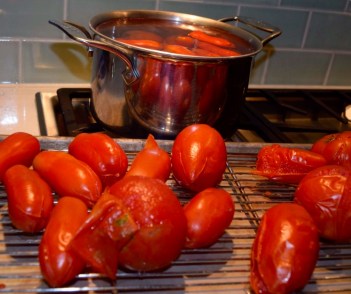
But then the gardening bug bit and we had to come up with a plan (beyond salads, bruschetta, and salsa), which has been tweaked and continuously simplified. I cut a small X in the bottom of each tomato and drop them (usually in batches) into a pot of boiling water. It only takes a minute or two to loosen the skins. I scoop out the hot tomatoes and spread them out on a cooling rack that I’ve set in a sheet pan. (This corrals hot drips, errant bits of tomato, etc.)
After a few minutes the tomatoes are cool enough to handle and I move them to another sheet pan lined with a flexible cutting mat. I remove the skins and the cores, and squeeze out as many of the seeds as reasonable. (I pretty much use my hands for the latter. As Ina Garden says, clean hands are a cook’s best tool.) What I’m really after is the “meat” of the tomato, which I drop into another pot. This is a messy job, but remember, I’m corralling all the tomato juice, seeds, etc. into a sheet pan which I periodically empty.

This really doesn’t take that long. After I’ve gathered the best of the tomatoes into the pot, I simmer them for maybe 20 minutes, just to get rid of more of the juice. You can also pour off excess juice. (Hint #1: Too much juice in the container makes the tomatoes watery.) Then I ladle the simmered tomatoes into quart containers and freeze. (Hint #2: This year I’m cooling them first in the fridge, uncovered, to try to eliminate frost in the containers. We’ll see.) I use them in recipes that call for crushed tomatoes.
A book I can’t put down
 When I’m not putting up tomatoes, I have had my nose in a new book, Varina: A Novel by Charles Frazier. You may have read Cold Mountain, set in the back country of the Civil War, for which Frazier won the National Book Award. This novel returns to the Civil War era with the story of Varina Howell Davis, wife of Jefferson Davis, president of the Confederate States of America.
Frazier begins in 1906, telling Varina’s story, largely in her own voice, in flashbacks. At first I found this point of view a bit cumbersome. But as I became better acquainted with Varina, who was a writer in her own right long after her husband died, I began to better appreciate the sum of her life.
Varina Howell married Jefferson Davis when she was 19. He was 36, a widower, a war hero, and destined to leave behind the plantation life she expected for politics. Especially well-educated for a woman of her time, including a term in Philadelphia at a prestigious female academy, Varina grew up with slaves, even owned slaves, but never fully embraced the Confederate Cause. She was often the object of criticism while presiding over the Gray House in Richmond. When the Confederacy fell, she and her children were forced to run for their lives. Although she worked hard for her husband’s prison release, theirs was a less than ideal match. They often lived separately; however after he died, Varina completed his memoirs and eventually embarked on a writing career of her own.
Does she sound interesting to you?
Without her place in history, Varina Davis would still be pretty interesting. With it, she’s compelling. This is not the first book written about her. I’m sometimes suspicious of “historic fiction.” I think it’s often light on the history and/or the fiction, but that’s certainly not the case here. Frazier does a masterful job.
What about you? What are you reading or cooking these days? Whatever it is, I hope you’re enjoying these last weeks of summer.
Thanks for stopping by. See you next time!
 It’s been hot. I’ve been bored. The blog post I’ve been planning just isn’t coming together. Like a kid getting sidetracked from a deadline on a school project, I find I’m easily distracted. And so this is what I’ve been up to.
 This sauce was delicious, easy, and so fresh!! I served it with penne, some meatballs from the freezer, and beans from Steve’s garden. Next, I want to try it with homemade meatballs and polenta, a fairly hearty appetizer we sometimes share at a local restaurant. I’ve been thinking that a slightly larger serving of meatballs and a vegetable on the side could turn that appetizer into an entree.
 It is especially effective with this woven silver basket. (Yes, I also polished some silver.) This was a wedding gift from a special friend in my earliest basket-collecting career. It’s a challenge to clean, so briefly dipping it in this bath has been a lifesaver. My basket used to make appearances on only the most special occasions; now it hangs out on the coffee table or a side table all the time!
 I think I already shared with you that recently one of my reading groups discussed Katherine Graham’s autobiography, Personal History. We had all loved “The Post” with Meryl Streep and Tom Hanks and wanted to learn more about Kay Graham. We came away impressed with what Graham accomplished, especially with regard to the Pentagon Papers and Watergate. Her father owned the Washington Post and turned it over to her husband, Philip Graham. Kay took over when Phil died unexpectedly. She make it profitable for the first time, stuck to the Post’s editorial principles and drove two of the most significant stories in the 1960’s and 70’s, making it one of the most powerful and respected papers in the country.
 Despite my affection for a Carolina beach in the summer, I am not a hot weather girl when I’m in the midwest.
 Then, I saw a great movie. (I’m old enough to recall that going to the movies was one of the best bets for air conditioning. The advertisements teased, “It’s cool inside.” ) “RBG” is a documentary about Supreme Court Justice Ruth Bader Ginsburg. She is a truly remarkable woman who has quietly, determinedly, changed the legal landscape for women and men. The movie deftly covers her childhood, education and legal career as well as her time on the Supreme Court. (When she was appointed to the Court by President Clinton, the Senate approved by a vote of 97 to 3. Those were the days.) Friends, family and colleagues offer interesting comment. The movie seamlessly captures her and the challenges of equality.
 But, if Gatsby seems a little heavy for this season, I also picked up another Sue Grafton mystery from the library. I haven’t read “E” Is for Evidence but I think it will be the perfect porch read for a lazy afternoon. My daughter passed along Windy City Blues by Renee Rosen. We have both read What the Lady Wants, Dollface, and White Collar Girl, all set in different eras in Chicago. Their Chicago settings make them great fun for us. Last but not least, I’m working on Ron Chernow’s Hamilton. I had to after seeing the play. Alexander Hamilton is such a fascinating character. Does anyone else do this, read more than one book at a time? This is not my habit, but sometimes it works out this way!







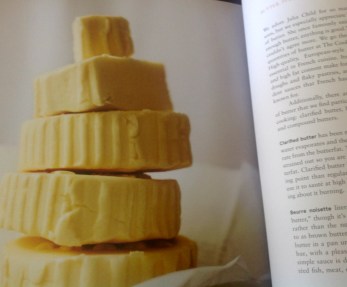
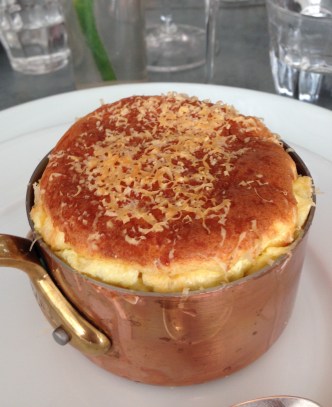
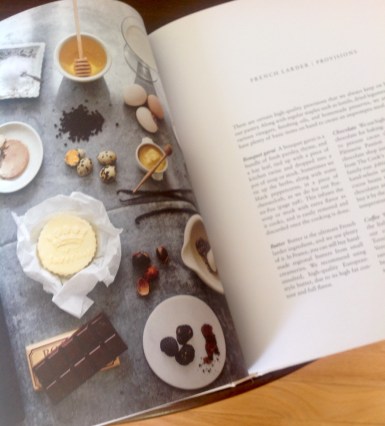
 If you follow me on Instagram. you already know how excited I was when my copy of The Cook’s Atelier Cookbook arrived. The Cook’s Atelier is the cooking school I attended last spring in Beaune, France. I wrote about the one-day workshop,







 If you have been reading my blog, you know it’s hard for me to mention “book” without commenting on specific titles. You also may have noticed that my reading tastes are all over the place: biography, history, historic fiction, current fiction. Do I lack focus or do I just like to read? I have no idea.



 In the spirit of New Years resolutions, but with a limited commitment, I’ve embarked on an Instagram project I came up with to 1) challenge myself in the New Year and 2) promote more IG activity (you can follow me


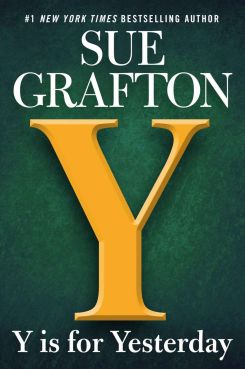 After I had decided on my alphabet challenge, Sue Grafton died. I’ve been a loyal reader of her alphabet mysteries (beginning with A is for Alibi published in 1982) since I discovered them, although I think I may have missed a few in the middle. In fact I just finished Y is for Yesterday a few months ago. Sadly, it is her latest and her last. Sue Grafton’s final illness kept her from work on the last book in the series. (As I understand it, per her request, another writer will not take over the last book, which would have been Z is for Zero.)
 I still love “The Crown.”
 One way to soothe my September/back-to-school nostalgia is to look ahead to a year of good reading with my AAUW book group. This group has met for decades, long before Oprah launched her book club and the Internet spawned bloggers (like me!) with all manner of lists.
 Do you have a favorite hotel? I’m talking about a legendary, grande-dame of a place that may or may not be showing its age but remains elegant, with discrete service, a five-star dining room and the requisite, legendary bar. The Ritz in Paris or the Plaza in New York may come to mind. In Chicago it would probably be the Palmer House or the Drake. In Moscow it is the Metropol Hotel.
 Ivy & Ironstone