My everyday 10 and counting

One of the blogs I follow is Mocadeaux, another empty-nester who loves food, wine, travel and grandchildren (pretty much a kindred soul, I’d say). She recently wrote a post on her “Everyday 20,” which listed 20 things she buys and uses every day. The idea comes from an American Express ad encouraging card holders to use their Amex card for these everyday things. We traded comments on that particular post and although it turns out that neither one of us uses that credit card, she encouraged me to try the same topic.

Alas, Mo, I only came up with 10 right now, though there will be a part 2 in the near future. Some of these are one-time or occasional purchases, but they are things I appreciate every day. In the meantime I’m hoping everyone will read on to learn — in no particular order — my “Everyday 10.”

1. My iPad. Like Mo, I am an Apple fan. And though I’d be lost without my iPhone and I love my Mac, what I pick up most often is my iPad. I use it to read and write emails, for Instagram, to view photos, read the news. I even download books to it. It’s all about the bigger screen.

2. Instagram. I came late to the party on this, after my daughter encouraged me to try it. But honestly, I just love it. It’s like a new design magazine every time I scroll down. Who do I follow? Other bloggers, foodies, designers, some magazines, travelers, my daughter (she’s a great photographer). I do not follow celebrities, politics, fashion, music, or movies. I do not follow FaceBook friends. IG is simply my daily dose of the pretty that interests me most. (You can follow me here.)

3 & 4. Rimmed baking sheets and pre-cut parchment papers to fit. I use these daily, sometimes more than one for a meal, for roasted vegetables, meat and poultry browned on the stove and finished in the oven, appetizers, cookies, and more. Although I snapped a photo of them here as my husband was preparing meatballs, I also use a half-size pan that’s perfect for roasting vegetables, etc., for just the two of us.


5. While we’re in the kitchen, the vertical storage in this cabinet. I keep baking sheets, frequently used trays, cutting boards, cooling racks, and a few shallow pans in this cabinet above my oven and microwave. This is one of the custom touches I insisted on when we remodeled our kitchen and I’m so glad I did. I can see and reach everything here. (High cabinets and shelves are lost on short people like me.) In fact I wish now there was space for more of this storage in the kitchen.


6. Grocery store flowers. I am happiest when I can snip flowers or greenery from my own yard and  garden, but the growing season in Chicago is so short and the winter is soooo looong. Frankly the blooms and greenery in the store see me coming and call my name. If you choose well, for $10 you can bring home an armful of sunshine.
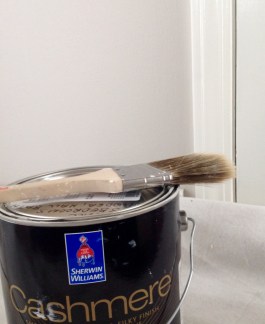
 

7. This paint color. Designers describe Sherwin Williams Popular Gray as a “warm gray,” which I thought of as an oxymoron until I tried it on a wall. I love it! Last year I used it in the upstairs/downstairs hall, the powder room and guest bath. Ditto this year in the spare bedrooms and my husband’s office. It’s a soft, neutral background that works well with assorted furniture finishes, artwork and accessories. In the past our rooms have sported a variety of paint colors (not to mention my wallpaper period) and I’m loving the uniform background. And, see #8 below.

8. White woodwork. The Popular Gray walls are awesome against the Benjamin Moore Simply White woodwork and doors. When this painting mission began, we decided to paint our dark, stained woodwork. And, yes, it’s a lot of work: sanding, priming, then painting two coats. (Full disclosure: pros did a lot of it.) But, what a difference! It totally transformed the house, taking it from subdivision 70’s to now. Paint really is a miracle worker.

9. My sewing machine. Like a lot of women my age, I started sewing in my early teens, cranking out A-line skirts and dresses. As time went on I began to sew more sophisticated garments. I like doing things with my hands, and, of course, I like clothes. Fast forward to my first apartment and then our first houses. I made curtains, so many curtains for about a decade, but sewing with active children underfoot was challenging. I finally pretty much gave it up. I made a few Halloween costumes and even sewed for my daughter’s American Girl doll, but I was rusty and not always pleased with the results. Fast forward once more to my retired self. Not only do I have time to sew, but I can take my time with a sewing project. And, I really wanted lined, white linen curtains in the living room. Not gauzy; something substantial that would hang in graceful folds. So, off to the fabric-lover/decorator’s nirvana otherwise known as Calico Corners and fifteen yards of fabric and lining plus a few afternoons at the machine and I have exactly the look I had in mind. My machine and I will be spending more time together.

10. My new soup/pasta/salad bowls from Williams Sonoma. I’m a bit of a dish junkie, not just in terms of transferware and ironstone collections, but also about what I put on the table daily. I’ve had a set of pasta bowls for years, but they were really big (and encouraging really big servings!). I wanted something that would be more multi-purpose, serving pasta, but also hearty soups, chili, even one-dish dinners like beef bourguignon. These stylish and sturdy white bowls from Williams Sonoma are perfect for all the uses I noted here, as well as an entree-sized salad. Win, win, win!

What’s your everyday 10 or 20 these days? I’d love to hear!

Thanks for stopping by. See you again next time!

Groceries, the books we read, and where we shelve them

The bag may be recycled, but this grocery delivery vehicle is not all that new. Everything old is new again.

Everything old is new again. I was talking back to the television earlier this week and my husband suggested I blog about that particular angst, so here goes…

The Today show featured a story about the growing competition among online grocery shopping and delivery services. First, I think this is awesome and I would have loved this when I had two small children. But, this isn’t new! Ordering online is new, but not delivery.

Long before the chain groceries (and I know I’m dating myself here), Chicago neighborhood grocers delivered. My grandparents lived in a modest city neighborhood. No one owned cars. They walked to the butcher, the bakery, the bank. I remember doing all these errands on foot. (Which city-dwellers like my daughter still do.)

We carried lots of stuff home with us (Grandma took her special cloth shopping bags along for this purpose; that reusable Whole Foods bag isn’t a totally innovative idea either.) But if we bought many things in the grocery, or heavy stuff like flour and sugar, the groceries were delivered later, in a cut-off carton, usually by a schoolboy who worked for tips. I’m not even sure there was a “delivery fee” involved, but I do remember Grandma making sure she had tip money. And her delivery boy knew to come down the gangway to the back door, let himself into what was really the basement, and leave the box there. (A pre-requisite, I’m sure, for getting a good tip.) In fact, my uncle’s first job was an after-school gig delivering groceries.

Instagram on my mind.

Last month while I was languishing on the couch recovering from the flu (and before I started talking back to the television), I spent way too much time on Instagram, Pinterest, and cruising various blogs. Perhaps because I was still trying to put things back in order here after the painters had freshened up the living room and bedrooms or maybe just because I’m always rearranging shelf space to accommodate books and “stuff,” I started saving photos of shelves. I grew up in a house with book-laden shelves and have always had the same in my own home, so I am always amazed at book-less shelves. I think they’re pretty, but they just aren’t me.

Here are a few of the images I’ve saved to inspire my own shelves.

From James T. Farmer, I love the way this includes plates, pictures and books stacked this way and that. Not too busy but not boring either.
Here, more books on the shelves, but still interesting accents. I love the shelf over the door AND the hats on it. Image from India Hicks posted by Blue and White Home.
I really like this book-lined background for a chair and table. From Nell Hills.


The books on the shelves, or a few recent reads.

If you have been reading my blog, you know it’s hard for me to mention “book” without commenting on specific titles. You also may have noticed that my reading tastes are all over the place: biography, history, historic fiction, current fiction. Do I lack focus or do I just like to read? I have no idea.

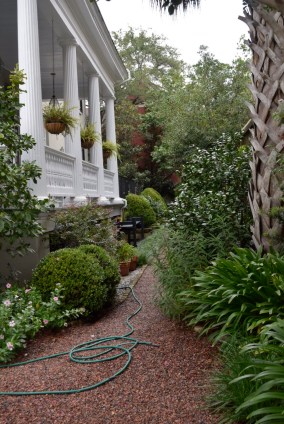
My new favorite book recommendation is Jubilee by Margaret Walker. Walker is a widely known and respected African American writer and scholar who used her own family’s oral history and decades of research to tell the story of Vyry, daughter of a white plantation owner and his black mistress. The book spans the lavish antebellum years in rural Georgia, the ruin of the Civil War, and the empty promises of reconstruction. If you liked The Invention of Wings by Sue Monk Kidd, I think you might like this too.

After Jubilee, I needed something lighter, so I read Sue Grafton’s first Kinsey Milhone mystery, A is for Alibi. I love Sue Grafton and I mourned her passing here. I discovered this series a little later on in the alphabet, and I wanted to see if this first mystery was as well-crafted as number 25. I was not disappointed. These are all great reads.

Right now I’m reading The Story of a New Name, by Elena Ferrante. It’s the second book in her Neapolitan series. My book club read My Brilliant Friend, the first in the series, and many just moved right on. I’m enjoying this book more, but it remains a tough read. This is translated from its original Italian. The language often seems clumsy and wordy, characteristics that I think better editing and translation may have improved. However, I love the story of two smart young women in an impoverished neighborhood making dramatically different choices while trying to hold on to their friendship.

Also on my list: The Other Einstein, Marie Benedict’s story of Albert Einstein’s first wife, Mileva Maric; George Eliot’s Middlemarch, because I’ve never read it (and I was an English major!); and Origin by Dan Brown, because I’m a bit of a sucker for his historic/travelogue romps.

What are you up to as we wait for spring? Let me know! I’d love to hear from you.

Thanks for stopping to read. See you next time.

A hit, a miss, and a tradition rolls on

This was my morning walk to the beach on Kiawah Island.

My husband and I, along with our children and grandchildren, spent last week on Kiawah Island, South Carolina. It’s safe to call this a family tradition since we have taken this same vacation for almost all of the last 25-plus years. (Some people might call that a rut, but I like to think of it as a home away from home.)

We look forward each year to familiar days at the beach, bike rides on the island, and favorite restaurants, but each trip also seems to have its own adventures. (On the first morning of the first year my daughter-in-law joined us a baby shark was discovered swimming along the beach. We really worried that she’d never come back!) It’s the kind of place where a waiter in your favorite restaurant turns out to be the boy who lived across the street 20 years ago and an old friend from those mommy-and-me days walks by on the beach where you’ve settled in with a book.

Part of the charm of Kiawah (apart from 10 miles of pristine beachfront, protected dunes and a lush, protected landscape devoid of chain stores or restaurants) is that it’s just 20 miles from Charleston, recently named (again) one of the top destinations in the US. We knew this early on. Charleston is ground zero for American history, foodies, and charm.


I am totally charmed by Charleston’s many gardens, some of them public, some more private, and some completely hidden. At this time of year they are very lush and green.

A hit.

This year my husband and I were in Charleston a day ahead of the rest of the family and stopped for lunch at one of his favorite restaurants. We’d barely settled into our booth when another diner stopped by our table and asked if we were visitors.

Why, yes, we are.

Well, said the diner, I was just given two free passes for Fort Sumter but we’re leaving now. Can you use them? (A bit of history: Charleston’s harbor, where the Cooper and Ashley Rivers merge with the Atlantic Ocean, is also home to Fort Sumter, where the first shots of the Civil War were fired.)

This is one of the tricks of Charleston. The sense of polite, genteel hospitality Charlestonians are known for just starts rubbing off on everyone. And for history geeks like us, the passes were like finding money in the street.

The boat to Fort Sumter offers a good look at the U.S.S. Yorktown, a decommissioned aircraft carrier. It’s another great side trip when you need a beach break.

We had been to Fort Sumter years ago, on one of our first trips. Our kids were in grade school then, and it was a very hot day. The best part was the boat ride out there and back; there was very little left of the fort. This time, our daughter, my husband and I made the trip one afternoon. It was not as hot and the boat ride was still fun, but we also appreciated the fort far more. We could not remember if there was a Park Ranger talk the first time around, but there is now and although it was short, we learned a lot.

Fort Sumter was actually the site of two Civil War battles. As a result there is very little left of the original fort.

Fort Sumter was built on a manmade island positioned to guard the all-important Charleston Harbor. After the War of 1812 the U.S. Army realized existing fortifications on either side of the harbor could not stop an attack on the city. Despite the fact that there is very little left of the fort, it was originally pretty large — three stories high and designed to accommodate a substantial number of men and even officers’ families. (It was not yet staffed except for Union troops who had secretly moved there from Fort Moultrie after Lincoln’s election.) After those legendary shots were fired April 12, 1861, and subsequent shelling, the Union Army was ultimately forced to surrender. However, this was still a “Gentleman’s War,” so, until he surrendered, U.S. Army Major Robert Anderson was allowed to receive supplies from the city and use telegraph lines there to communicate with his commanders. (This is, after all, Charleston.) After the surrender Anderson and the remaining soldiers were allowed to leave on a supply ship. They went to New York where they received a hero’s welcome.

And that’s how history unfolds…

A miss.

Look at the detail in this brickwork! From our walk around Charleston.

For the last few years, my daughter and I have made a point of going into Charleston early one morning so we can walk and photograph the streets. Last year we did this on a very hot, humid Charleston morning and, after an hour or so, we were desperate for cool air. We turned a corner and there was the Nathaniel Russell House, one of the “house museums” operated by the Historic Charleston Foundation, so we went in and took the tour — again. We are “repeat offenders” because although houses like this are historic, they are not static. Continuing research, based on excavations, paint analyses, or even newly discovered documents or furniture often lead to changes in the house as well as its interpretation. (We really are history geeks!)


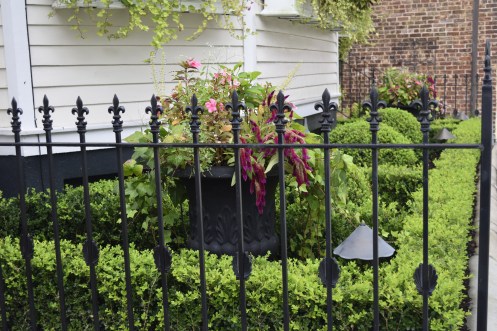
These tiny front gardens, often bordered by boxwood, are so pretty and make the most of small spaces.
Another garden bordered by beautiful wrought iron fencing. This fence is very elaborate, but it still allows the homeowner to show off her garden.


A view of the Calhoun Mansion’s piazzas, or side porches.

Last year we had passed the Calhoun Mansion and decided we should visit it next, so this year, after a walk that was far more comfortable (and at least 10-degrees cooler), we headed down Meeting Street in time for the first tour. We knew the house, built a few decades after the Civil War, was different than others we have toured (all pre-Civil War, often by many years). What we did not realize was just how different it would be.

A bit more history: the 23,000 square-foot house was built in the 1870s by George W. Williams, who had made a fortune as a merchant-turned-Civil War blockade runner. The docent who showed us around said the house was constructed in the early years of the Gilded Age (think Vanderbilt and Carnegie), when building mansions to hold vast collections of art, furniture and collectibles was common among men of certain stature. It became known as the Calhoun Mansion when Williams died, leaving the house to a daughter married to Patrick Calhoun, grandson of John C. Calhoun.

Calhoun House gardens featured beautifully tended boxwoods, brick paths and a number of water features.

I wondered, out loud to the docent, how Charlestonians accepted this mansion in their midst. The city’s residents, once successful landowners and professionals living privileged lives, had suffered terribly during the Civil War and the city had struggled to survive. Post-war society was so polite that those who did have the means to repair or repaint their homes, did so sparingly, not wanting to embarrass friends and neighbors who could not afford to do the same. The docent pointed out that the construction employed hundreds of unemployed citizens for years.

The mansion is packed with furniture and collectibles, but almost none of it is original to the house. Those belongings were auctioned off after Calhoun suffered financial setbacks. The current owner, however, is an avid collector and has filled the house with the same vast quantities of “stuff.” The floors, the woodwork, the Tiffany chandeliers and the glass ceiling in the music room are all beautiful. But I found it hard to focus on most of it, along with the lovely collectibles, just because there was so much stuff. The collection ranges from Tiffany glassware and a Wedgewood-decked chandelier to Kibuki armor and English footstools made from the feet of real elephants. It’s dizzying.

People love it, but I was confused by the clutter and frankly a little “turned off” that a family really lives here part of the time and charges admission to allow tour groups. Am I weird? Probably. Perhaps I just want a “purist approach” to 19th-Century houses.

The gardens were beautiful, but on the whole I’d call this a miss. Interesting, but maybe not for the right reasons.

On the other hand, here are a few more shots from that morning in Charleston.


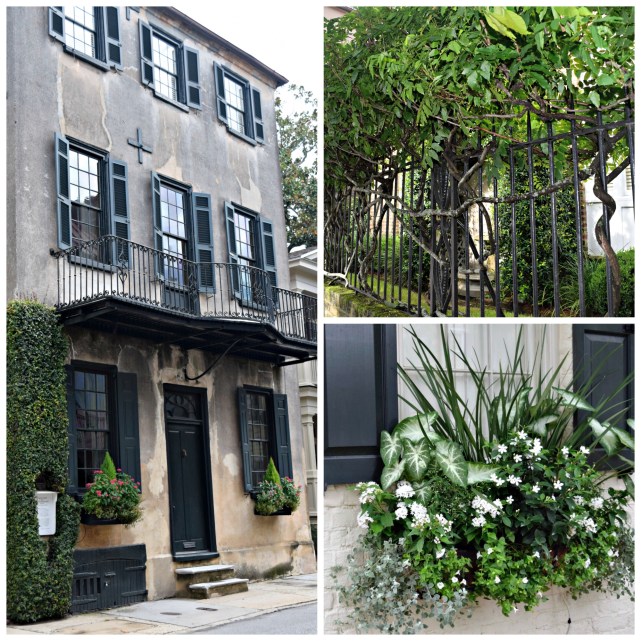
A lot of Charleston houses are stucco . I especially like the black iron and trim. I know, here I go with fences again, but look at how the vines have woven themselves into this wrought iron. Finally, I love this window box. Nothing fancy, but so lush!

Whether you are traveling or staying close to home this season, I hope your summer features far more hits than misses!

Thanks for stopping by and see you next time!

PS: You can follow me on Instagram here.


Lilies, links and a new artist


Sometimes it’s the bits and pieces and not the “big picture” that capture my attention. Here are a few things that caught my eye this week.

An artist to watch

This past Sunday Steve and I headed downtown to meet some friends at the Millennium Art Show (which was really an excuse to catch up, walk around bit and then grab something to eat.) This was a small show but with some really interesting pieces and I’m sorry I didn’t spend more time seriously looking at the works displayed. Hmmm, perhaps we were chatting more than looking? However, I did enjoy re-discovering Daniel Lai.

This piece by Daniel Lai is called “Teach a Man to Fish.”

Lai is a Tennessee artist who enjoys sculpting and repurposing books into the most amazing pieces of art. I first saw his work at the Wells Gallery at the Sanctuary on Kiawah Island. His work is so distinctive that I immediately recognized him at the show on Sunday. He says he started playing with books as a bored student, then was encouraged to re-purpose some of a friend’s books. I’m charmed by his imagination, the many ways he uses books and pages, those wonderful clay figures and the little extras, like the fishing pole. I think his work is both whimsical and provocative. What about you?

I captured the images, above, of his work from screen shots on You Tube. I wanted to share a few more images of his work and my photos just didn’t do it justice.

Three links to visit

I have been known do lots of blog-reading and coffee-drinking in the morning. Last week I was giving myself a real break after several especially busy days. And here’s the fun, my email inbox was full of links to some great blog posts.

Karianne at Thistlewoodfarms always has a fun take on life (she’s also a wonderful photographer and shares amazing DIY projects). She did a great post on 5-minute cleaning tips. I loved this, because she mentioned the messes that you (or at least I) forget about (like Cheerios in the silverware drawer). I also love the idea of limiting cleaning chores to 5 minutes. Click here for her tips, and if you have a 5-minute tip, please share!

This is just a sample of Jackye Lanham’s work that I found on the web.

Joni Webb at Cote de Texas did yet another of her beautiful, well-researched and illustrated posts, this time on designer Jackye Lanham and her home in Charleston, SC. First, Ms. Lanham does beautiful work: elegant, traditional rooms, minus the do-not-touch museum look. You would like to live in her rooms and her Charleston house, well, just take a look at the post! This is pure eye-candy. Pour a cup of coffee and just enjoy. (Joni’s posts are always a mini-course in art, architecture and design. She did a remarkable post on the real homes and rooms behind The Crown.)

Finally, Elizabeth at Blue and White Home, has a wonderfully clean, easy, mostly-traditional-but-sometimes-modern aesthetic (she’s also a Chicago designer, yay!). One of her recent posts turns that look onto some floral arrangements she made from blooms in her parent’s Vermont garden. They are simple, unpretentious, infinitely doable and most of all really pretty. It’s one thing to go to the store for a few bunches of flowers and greenery (we all do it all the time), but quite another to create such pretty pieces from what we have growing in the yard. Check them out.

The “stars” in my garden

My garden has a few spectacular successes this year, as well as a few failures. I don’t know if it’s the weather or, more likely, my not-so-green thumb. However, I walk the garden daily, sometimes taking pictures, often cutting some blooms to bring inside, pulling assorted weeds and dead-heading spent flowers. Not surprisingly, the stars of this year’s garden are the daylilies, and these purple coneflowers that are popping up everywhere. Take a look:

I hope you’re finding some “fun stuff” in your inbox and enjoying these July days!

Thanks for reading and see you next time!


The devil – and the delight – in the details

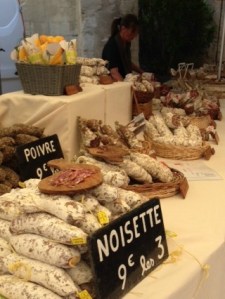
Sausages at the market in St. Remy are thoughtfully arranged.

Since we returned from our recent travels in Burgundy, Provence and Paris I have been thinking (and thinking) about the French attention to detail, the way fruits, vegetables and even sausages are carefully arranged at the market; simple pots bursting with flowers on every cafe table, cherries thoughtfully piled on a footed plate, individual pastries arranged in a boulangerie window. Even the arrangement of garden plots.

Although attention to detail is one trait that characterizes French charm, it’s not limited to that part of the world. I have been looking at details closer to home, from what catches my eye on my Instagram feed, to Pinterest boards, and garden plots. And for me, at least, it’s often the details — simply shown or in layers — that capture my attention and imagination. (Perhaps this explains how I can spend hours arranging plates on a shelf, pictures on a table, etc.)

I fell in love with this vegetable garden at the Chateau de Courmatin. Plants variously arranged, here by color and at an angle. Other parterres were arranged in various geometric patterns.

What makes these details so important? Obviously, we all want to put our best foot forward. We care about our surroundings and the people in them; personally, I want the surroundings to be visually appealing as well as comfortable. And I want the people to be comfortable and feel special or even pampered at my house.

In fact, I’m not comfortable if something is off visually. In my case, this may be genetic…

Some of us may be born detail tweakers

My mother had a way of arranging appetizers on a tray or serving platters on a buffet. She tweaked this and fluffed that and everything looked a little better. She fussed over curtains inside, then went outside to see how they looked from there (because pretty inside was only part of the story!).
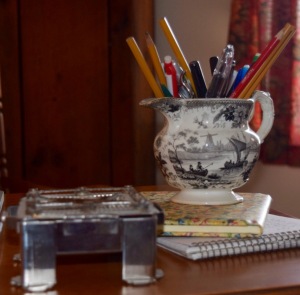
My dad was no better. He was an ad man in the 50‘s and had an innate sense of balance (which he would point out is not the same as symmetry) and a sharp eye for details. One of my fondest memories is of the two of them engaging in a silent duel over the placement of a new pair of arm chairs. Dad happened to be home to accept the chairs, and after the delivery crew left, he adjusted the chair placement on each side of a table as he & Mom had planned. When she came home, Mom admired the chairs and then readjusted the angles on their placement. (Dad was out of the room.) Later, he walked back in and readjusted the chairs. And so it went for the better part of a week. Dad adjusted the chairs every morning. Mom, who left first and came home first, readjusted every afternoon when she returned from work. Until, that is, she finally caved and agreed to Dad’s angle.

There are details and then there are details

I can’t remember the name of this daylily in my perennial border, but I love the ruffle along the edge of the petals!

Obviously the details that I have been focusing on have to do with design and presentation. But life is loaded with other details. In my editorial days, I was involved in a lot of meeting/event planning (something for which I did not have much talent), and though I dragged my heels at many of the details we added to each agenda, itinerary, and banquet event order, you only need to be unexpectedly left in charge of one event to know how important those details are. You only need to run one meeting to appreciate the importance of a good agenda, including who reports on what. If you start skimping on those preparations, and someone always does, then it’s like fabric fraying around the edges. The result is not as crisp, clean and smooth as it should be.

And so the lesson is: the outcome depends on your attention to the details.

I hope I’m not painting myself as an uptight, Type A person. If anything, I tend to fly by the seat of my pants much of the time. This explains why, when I totally forgot a book group was coming to spend the evening on my back porch, I was able to invite them in, open some chilled wine and serve up cheese and crackers. My detail, as it turns out, is to keep cheese and wine in the fridge and crackers in the pantry.

Where was I going with all this?

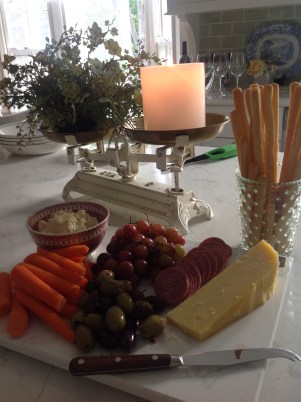
Oh, yes, the French attention to detail. This is one of my souvenirs from France. I want to remember to take the time for the attention to details, the carefully wrapped package, the way the cheese looks on the board and the olives in the little glass jars (that I bought at the French flea market), the buttered cookie tins sprinkled with lemon zest to add a little extra. The bottom line is that it doesn’t take much time or money to add a bit of graciousness to our days. And that’s what I’m after.

Which details catch your eye and which ones bypass your attention? I’d love to hear from you.

See you next time!