What do basketball and interior design have in common? It’s actually pretty simple.
Starting in the 4th or 5th grade and continuing for several years, my basketball-loving son enthusiastically followed the career and athletic achievements of Michael Jordan. (Who am I kidding, in the late eighties and early nineties we all loved #43!) His basketball feats seemingly had no limits. There were gravity-defying gymnastics that invariably ended with a basket. But there was also the ball handling, the competitiveness and the work ethic. (I know this because Doug watched tapes of his plays again and again and again. They were the soundtrack of my life for quite awhile.)
Hero worship is something we all occasionally fall into, and, depending on the hero, it’s not all bad. We might learn some new skills and/or acquire some new interests, etc. So it’s hardly surprising that my love of dishes, fabrics, furniture, color and design — really all the decorative elements — have led me to my own group of decorating heroes.
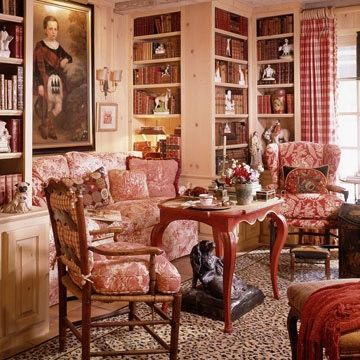
The essence of French country, with the cheery (and cherry) reds, the check and toile fabrics, the curvy legs on the table in the foreground, charming accessories layered into the bookshelves and on the tables.
You may recall that I wrote here about the influence Mary Emmerling had on my early decorating, but she’s not my only design hero. If you checked my bookshelves, you would see that Charles Faudree is clearly a favorite. I’m not at all sure I have ever succeeded in recreating his lush, layered designs, but I’m happy to keep trying.
For those of you who may not be familiar with Faudree, he is an American designer known for his colorful take on country French interiors and credited by many for popularizing the look. I had admired a number of his rooms in magazines like Traditional Home for some time before I realized that they were all the work of one man.
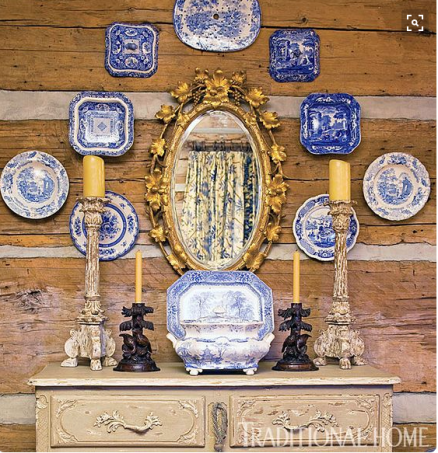
You may recognize this from my post on transferware. Charles Faudree is the inspiration, at least in part, behind my collection..
Faudree’s designs feature a lot of center tables like this one, above, in a library (often the way he referred to an office or study) and, below, in an entry. The table tops are always decked with books, flowers and other meaningful brick-a-brack. I don’t have space for a center table, but I have toyed with similar arrangements atop our dining room table and on side tables.
Different spaces, same aesthetic
One of the things I appreciate about Charles Faudree’s designs is his ability to translate his aesthetic into different settings. The image above is a very traditional dining room, but the photo below features a more contemporary, voluminous space that still maintains his country French design.
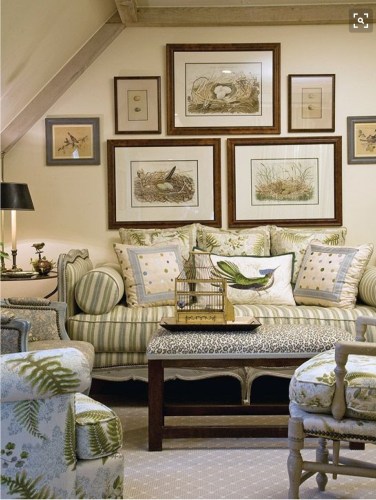
Not all Faudree rooms are huge nor are they perfectly proportioned. I love the sunroon, below, but it’s clearly a narrow space.
And what wonderful rooms, furnished with beautiful antiques, plush couches and chairs always topped by a variety of pillows in a companionable array of colors, patterns, textures and trims (always trims — elegant tapes, fringe, tassels, ruffles, etc.). So many thoughtful details.
No room is too small or insignificant, no corner too obscure to escape his treatment. This would not work at my house, but I love the powder room below, especially the little Napoleon on the vanity, not to mention the sconces and wallpaper. Why shouldn’t a small powder room be so completely imaginative?
This transitional space, below, which could be clumsy in accommodating a distinct change of level, is instead totally charming; with chairs and a lamp it’s the perfect place to have a cup of tea or leaf through a magazine.
Despite his motto that “More is never enough,” Faudree often allows a distinctive antique or piece of art to stand on its own. I think the Swedish secretary, below, is from one of his own homes. And look how he allows the brooding Lincoln portrait to dominate the space.
But that “appropriateness” just one aspect of his aesthetic. For me, the real art of Faudree’s talent is in his attention to detail, perfectly placed objets d’arts, picture frames, figurines, cache pots, mementos, etc., all chosen to reflect the interests of the homeowner as well as the overall design. Many are pricey antiques, others are family pieces or flea market finds. (Truth to tell, I think the tension between high end and low end in one room or even one vignette makes a powerful statement.) In his hands, all of this fits perfectly into the greater design scheme. It’s personal, it’s layered, it’s thoughtful.
I’m not advocating assembling and displaying “stuff” for the sake of “stuff.” And I don’t think Faudree was either. But I do think that rooms devoid of artwork, photographs, books, collectibles from a hobby or travel tend to have a very sterile look, as though anyone could live there instead of the individuals who do.
This was the back entry to his own mountain cottage, but look at the style and personality he paired with function here.
I never tire of paging thru his books, reading and re-reading his comments about how or why various elements combined into the finished design. I always learn something new, about wall arrangements or color or collectibles. I also find that I am more than a little charmed by his impish personality, stories from friends and associates about buying trips in France and his prankish sense of humor. This is someone I really wish I could have met.
Sadly, Charles Faudree died in 2013. (I know, think of the rooms he could have designed, the books he could have written!) But, you can enjoy his many books from new and used sellers and even the library. Titles include: Charles Faudree Home,Charles Faudree Details, Charles Faudree Interiors, Country French Florals and Interiors, Charles Faudree’s Country French Living, Charles Faudree Country French Signature, and Charles Faudree Country French Legacy.
What about you, who or what inspires your interests?
The magic of Rome is that you can just round a corner and see the Coliseum or St. Peter’s or some other iconic image. I’m always amazed to fins myself in a situation like that.
Last fall as I was telling the multi-part story of our trip to Italy, life and “the holidays” got in the way, so here is my post about returning to Rome. I hope you enjoy it! (You can read about our earlier stops in Tuscany here and Florence here.)
Rome was our last stop in Italy. As with Florence, it was not our first visit. Last year we toured the Vatican Museums, the Borghese Gallery, and the Forum. It was fun going back with some of the tourist pressure off.
We took the highspeed train from Florence to Rome and checked into the Residenza di Ripetta, where we stayed last year. We love this hotel; it’s elegant yet comfortable and ideally situated between Rome’s Piazza di Popolo and the Spanish Steps. It’s just a few short blocks from the Via Corso, perfect for enjoying the daily passeggiata before stopping for dinner in one of the small, local restaurants in the neighborhood.
Checking off another Papal Basilica
There are four Papal major basilicas in Rome: St. Peter’s in the Vatican; St. John Lateran, which predates St. Peter’s and which we visited last year; St. Paul Outside the Walls; and the Basilica di Santa Maria Maggiore. We had seen St. Peter’s and St. John Lateran, so we decided to visit at least one more and Santa Maria Maggiore looked like it was within walking distance of our hotel.
In reality, the church was really only kind of in “walking distance.”
Rome is built on seven hills. What I have been trying to figure out, for two visits now, is why no matter where we are in Rome, we are always walking uphill. AND, if you are going downhill, you are probably navigating ancient, steep, stone stairs. It’s a puzzle.
We came upon Santa Maria di Maggiore from behind and there was no signage. We weren’t even sure we were in the right place. Then we walked around to the front and found the entrance and the requisite security screening.
Santa Maria Maggiore was built in the fifth century and served as the temporary Palace of the Popes after the the Avignon Papacy. Knowing this history I expected it to occupy a distinguished setting, but actually it just appears in an old Roman neighborhood, surrounded by cobblestones that set it apart from the surrounding street. Because Santa Maria Maggiore is a papal basilica, it is used by the Pope, especially on certain holy days.
Michelangelo’s Moses, intended to be part of a larger monument to Pope Julius II, remains in this basilica as part of the Pope’s tomb.
From here we walked (mostly uphill and then up a remarkable set of stairs) to Saint Peter in Chains (San Pietro in Vincoli), built in the fifth century to house the relic of chains believed to have bound Saint Peter when he was imprisoned in Jerusalem. This minor basilica is home to Michelangelo’s statue of Moses, a massive work.
Taking a museum break
Rome is a lot more than churches.
Capitoline Museums on Capitoline Hill (another hill!) house an amazing assortment of secular art and artifacts that reflect Rome’s history. Once two palaces facing a piazza, the site was redesigned by Michelangelo in 1536. We loved seeing this side of Rome, especially after our previous “day of churches.” But for me, the real star of the day was the view of the Forum and other ruins from Capitoline Hill as we walked out of the buildings.
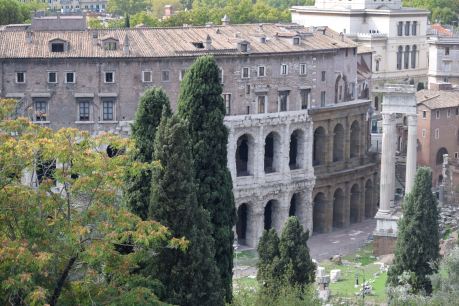
Looking down on the Forum from the top of Capitoline Hill. We toured the Forum last year, but seeing it from above made me appreciate the extent and sophistication of the ancient site even more. It’s much more extensive than our tour. Perhaps a reason to go back.These ruins across from the Capitoline Museums, including the Forum of Augustus and Trajan’s Market and Trajan’s Forum, are currently fenced off but appear to be even more sophisticated in design.
The Vatican’s Mosaic Workshop
On our last day in Rome we went to the Vatican for a tour of St. Peter’s and the mosaic studios. (And you thought we were done with churches!) We had toured the Vatican museums and the Sistine Chapel, ending with St. Peter’s, last year. But that tour happened to fall on a national holiday and coincided with a special Papal audience. We were shoulder-to-shoulder with other visitors the entire time.
This year we were hoping for a better experience and, boy, did we get it.
Steve found a tour that included the Vatican Mosaic Studio online with Viator. We joined just one other couple and our very knowlegeable guide early that morning. Contrary to the tour’s description, the guide started our tour in the Mosaic Studio so we would better appreciate the art we would see in the basilica. He knew what he was doing; the studio director took over and led the four of us into what I can only describe as a true atelier or studio, this one devoted to the preservation of the precious (and priceless) Vatican mosaics as well as the creation of newly commissioned pieces.
The studio is discretely located in one of the buildings in the Vatican complex. We began in a room that for all practical purposes was part conference room with a center table for display and part gallery, with a variety of mosaic pieces arrayed around the periphery. Sadly, photos were not allowed. The pieces are ancient and modern, sacred and secular. I assumed that the studio’s purpose was to maintain and/or repair the hundreds of square meters of mosaics in the Vatican. While this is true, the studio also produces new works that the Pope often presents as gifts to distinguished visitors and accepts private commissions from around the world. For example, once we stepped beyond this small gallery into the actual workspace, we saw one artist working on mosaic reproduction of a Monet painting.
In order to perfectly repair the Vatican mosaics the space also accommodates a mosaic library of the stones and colors used in all its artworks. These archives are stunning in both their simplicity and their extent. We were also allowed into another work space housing a small kiln where artists can fire the exact color necessary to complete a new work. There is no part of the mosaic process that is not painstakingly created and/or cared for. And of course, care is evident in every piece the studio creates. I’m not an artist, but I do like to understand the process behind art and this was a remarkable lesson.
The guide was, of course, so right to show us the studio first, because when he took us into St. Peter’s the stunning mosaic art there came alive. St. Peter’s Basilica is Christendom’s largest church; its size and decoration are breath-taking and, as our guide pointed out to us, purposely so. It would be impossible for even a “casual believer” to not be moved by St. Peter’s.
Michelangelo’s Pieta. It leaves me speechless.
One of the options on this tour was a climb to the top of St. Peter’s Dome. I’m sure the view is stunning, but that’s not my kind of climb (or Steve’s either). So, the other couple left with another guide for that tour and we had a private tour of St. Peter’s. One of life’s better travel surprises.
Sure there were hundreds of others in the the basilica (in fact a group of seminarians was being ordained at the very front), but it felt like it was just us and our guide. Our guide walked us through several pieces, explaining the meaning and symbolism in each mosaic. We also visited the crypt to see where previous popes are buried. I must admit that although we are not catholic, it was amazing to see names recent and historic on tomb after tomb. (Many of the earliest tombs were destroyed long ago.)
We both think our guide made all of this come alive for us. He was more than just knowledgeable, perhaps trained for a religious vocation in an earlier career? As we were leaving St. Peter’s he pointed out one final mosaic in the portico which purports to tell visitors there is more work to do for God as they leave the physical confines of St. Peter’s.
One of the mosaics as visitors leaves St. Peter’s, illustrating the work to be done beyond the basilica on behalf of the church.
We took this tour on our last day in Rome (our last day in Italy in fact), and we were overwhelmed with all we had seen. We stopped for a coffee then walked through some markets and found our way to Piazza Navona where we had a late lunch, before winding our way to the Spanish Steps and eventually back to our hotel. Here are some photos from that day.
Near the Vatican, Castel Sant’Angelo was initially built as a tomb for the emperor. Since no one could be buried within the city walls, Emperor Hadrian used this commanding space just outside the walls. Later it was used as a prison and as a last refuge in times of danger.
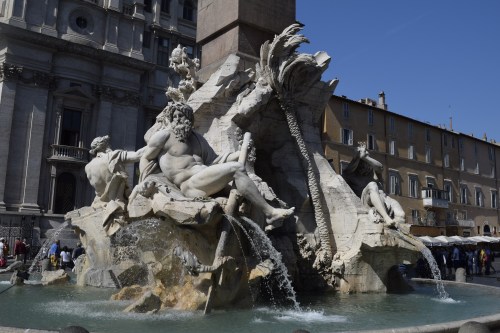
The Four Rivers Fountain in the center of Piazza Navona by Bernini demonstrates the four corners of the world using four river gods gathered around an Egyptian obelisk, a symbol especially favored by the Romans. This square, really an oval that was once athletic grounds, has played a role in Roman life since ancient times.
After three weeks in Italy, we were ready to head for home. But now, three months later, I could easily go back. It seems as if there are always new layers of Italy to peel back and examine, new museums, churches, vineyards and towns. I’m not tired of it yet!
Florentine rooftops from our room at the Pierre Hotel.
What do you do after all that fun in Tuscan hilltowns? We took a deep breath, braved the tourists, and headed to the historic heart of it all — Florence.
We waited a long time to finally get to Florence. Then we simply fell in love with the city. Steve and I both love London and Paris, but Florence is special. It’s compact and walkable (like Paris), has a seemingly endless supply of history and museums (like London), and it has what I think of as art and attitude.
The art is everywhere. The attitude is a little tougher to define, but I think it’s the total of the food and wine, shopping and sophistication, and most of all the history that ekes out of every corner. Now I can also say it’s even better the second time.
Our first visit to Florence was packed; there was so much to see. We planned differently this time, so we could wander more. In fact, the first afternoon, we did just that. After checking in at the Pierre Hotel we took a walk, found lunch, window-shopped our way to San Marco and back. We returned to the hotel and discovered they had delivered a bottle of prosecco and some snacks as a “welcome back” since we had also stayed there last year. This would be fun!
Getting serious about the Medicis
Florence was, first, a well-established medieval city, until it became the birthplace of the Renaissance and the credit for this goes largely to the Medici family. It’s impossible to spend any time in Florence without running into (and trying to understand) the financial and political power of the Medicis. Starting early in the 15th Century and lasting into the 17th century, the family enjoyed both political power (without holding office) and cultural influence.
The family’s wealth originated with its successful textile trade, which lead to the Medici Bank, the most successful in 15th Century Europe. With money comes power. The Medici’s support of the arts and subsequent impact on the Renaissance is unrivaled, starting with Giovanni di Bicci de’ Medici, who commissioned Brunelleschi for the reconstruction of the Basilica of San Lorenzo in 1419. Cosimo the Elder (another early Medici) commissioned works by Donatello and Fra Angelico. Most significantly Michelangelo accepted commissions from a number of Medici, beginning with Lorenzo the Magnificent, who was also a patron to Leonardo da Vinci (1452–1519) for seven years.
The interior of San Lorenzo is known for its Renaissance architecture, including the integration of the pillars, arches and entablatures and the use of dark stone.
The Medici impact on the church and royal houses in Europe was equally significant. The family produced three Popes of the Catholic Church, Pope Leo X (1513-1521), Pope Clement VII (1523-1534) and Pope Leo XI (1605) as well as two Queens of France, Catherine de Medici (1547-1559) and Marie de Medici (1600-1610). In 1531, the family became hereditary Dukes of Florence. In 1569, the duchy was elevated to a grand duchy and the Medici family ruled the Grand Duchy of Tuscany until 1737
So much for name dropping.
The Medici family, and its money, were behind many of the ionic structures in Florence, and we visited a number of them with a guide from Context Tours who took us through the San Marco Convent and Museum, the Medici Palazzo, Baslica di San Lorenzo, Medici Chapels, and the New Sacristy (designed by Michelangelo).
(Context Tours are perfect for independent travelers. Guides, or docents as Context calls them, have with MAs, Ph.D.s or other terminal degrees in their subject matter, tours are limited to 5 or 6 people. We were the only ones on this tour. We have also used them in Rome and Paris.)
Here is one of the individual cells, with its beautiful fresco.The convent library. Can you imagine working in this space?
The convent was one of our first stops. After a brief period of upheaval during which the convent (which was really a monastery for branches of the order of Benedictine monks) deteriorated, Cosimo di Medici the Elder commissioned architect Michelozzo to rebuild it. The result is an elegant but spare, Renaissance structure. Like other monasteries, the convent features two cloisters, a chapter house, etc. The friars’ cells are each decorated with a single fresco, many by Fra Angelico in collaboration with other artists. Cells are walled off but topped by a single trussed roof, and the entire structure is finished in white-washed plaster. It’s easy to see how the residents could pray and meditate in this atmosphere.
The convent was home to painter Fra Angelico and preacher Girolamo Savonarola (of the infamous bonfire of the vanities). Cosimo de’ Medici also had a cell in the convent, adjacent to those of the friars, for use as his personal retreat.
The Basilica di San Lorenzo was consecrated in 393 when it was still outside the city walls. Later it became the parish church of the Medici family, as well as the burial place for the family’s principal members. The current basilica is actually the “new” building, completed in 1449 (financed by the Medici family), well after Brunelleschi died in 1446.
The tomb of Giuliano di Lorenzo di Medici in the New Sacristy was decorated with this statue by Michelangelo featuring Giuliano and Night and Day. It is a companion to the tomb of Lorenzo do Piero di Medici and Dawn and Dusk.
The Old Sacristy was designed by Brunelleschi and is the oldest part of the present church. It is also the only part completed (in 1440) in Brunelleschi’s lifetime. The Old Sacristy contains the tombs of several Medici family members.
The New Sacristy was designed by Michelangelo. Work began on it in 1520. The artist also designed the Medici family tombs to be included, but did not supervise the completion of the project. This is a far more elaborate structure. I was especially struck by drawings by Michelangelo, discovered in 1976, on the walls of a concealed corridor under the New Sacristy!
Michelangelo’s drawings, discovered in a hidden corridor. A bad photo and hard to see because the drawings are behind glass, but I am totally fascinated by the fact that they are Michelangelo’s sketches. They seem inherently more personal than all the other works of his that I have seen.
The Medici Chapel, designed by the family working with the architects, and begun in the early 17th Century, reflects a very different aesthetic, featuring elaborate marble mosaics in a domed octagonal space. The octagonal shape is distinctive on the Florentine landscape. Family remains were actually interred in a crypt below the chapel.
After these heady lessons in Medici history, art and architecture, we thought we needed something more light-hearted, so Steve signed us up for a tour of the hidden stairways and spaces at the Palazzo Vecchio. (We did this the next day. Two tours in one day would have been way too much to wrap our heads around!) Most often known as Florence’s city hall, the palazzo was, for awhile, also a Medici Palace. But that’s another history chapter.
Heading up one of the “hidden” stairways. Probably not a great tour with claustrophobics.
The tour begins with an introduction to the Florentine Guilds, or Priori, who ruled the city. In 1342 the existing building was enlarged to resemble a fortress, including the addition of secret stairways allowing guild members to come and go in the night. The tour guide escorted our small group up and down some of these stairways, which, of course, included passing in and out of a number of secret doors. We had toured the building before, so this look at its “inner workings” was especially fun.
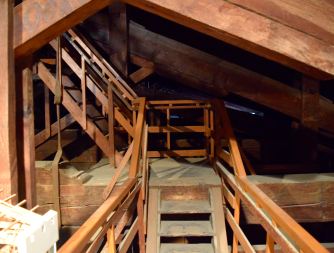
My husband and I loved the idea of these hidden doors. If you have read Dan Brown’s Inferno, or seen the Tom Hanks movie, you undoubtedly recall the crazy chase thru the Palazzo Vecchio. Remember the scene above the ceiling of the Hall of 500? After climbing dozens of narrow stairs, we were up in a corner of it. The space was more cramped than it appeared in the movie, but still very cool to see how the Renaissance building was assembled. Alternating rafters support the roof above and/or hold the ceiling below. What genius Renaissance architects displayed!
Whew! This is not all that we saw or did in Florence, but it gives you a good idea of how we spent our second visit in as many years. We enjoyed the fact that the city was somewhat familiar, we stayed in the same hotel (because we really love it!) and even ate at a restaurant we enjoyed last year. We also found some great new places. We ate lunch one day at the bustling the Central Market and I spent an afternoon at the Bargello. We spent a morning at the Pitti Palace (more Medicis) and found time to explore the tiny streets of the Oltarno. I think this second visit allowed us to “peel back another layer” on all there is to see in Florence.
What about you? Are there destinations you would happily return to? What about places you could happily say, “been there, done that” and move on? I’d love to hear from you.
Thank you so much for stopping by. See you next time!
So, I have been thinking about the pictures of our life lately.
If you follow me on Instagram, this photo of the Chicago River is not new. I took it last week, walking down Madison Street from the train station to the Art Institute. This is workday Chicago, part of what the commuters see (or maybe don’t even see any more) on their daily travels to work or school. It’s not as glamorous as Michigan Avenue or the lake front, but it’s very much the city.
As I was flipping through a week’s worth of photos, I was thinking about how they capture life. We all get cameras (or phones!) out for the big moments: birthdays, anniversaries, graduations, etc. And then there are the vacation photos: the beach, the mountains or even the backyard. But lately I’m thinking about daily life, like this photo of construction at Madison St. and Wabash Ave. My challenge is to capture that.
Last week started on a tough note with the pictures from Charlottesville, Virginia, animated by a sound track my mother would describe as “ugly talk.” Yesterday the country was captivated by the power of Mother Nature and a total eclipse that stretched from coast to coast.
Resilience may be one of life’s most valuable assets.
When I took the shot of the Chicago River, my husband and I were headed to the Art Institute in Chicago to see a current show, “Gauguin: Artist as Alchemist.” (If you’re a regular reader, you know this is my idea of a great day and it seemed like a good antidote to the noise of Charlottesville.)
Most of us think of Paul Gauguin as the painter of vibrant and exotic scenes like “Tahitian Women on the Beach.” But this exhibition took a much closer look at his creative process, especially his ceramics and wood carvings. (I know, who knew he even worked in these mediums?)
Gauguin actually began his artistic expression as a wood carver, something he was easily able to do as a youthful sailor. Before he was a painter, before he was a businessman, before he was a husband and father, he was a commercial sailor and traveled the world more than once. The experience had a significant impact on his artistic expression. This single figure, right, is something a sailor would carve.
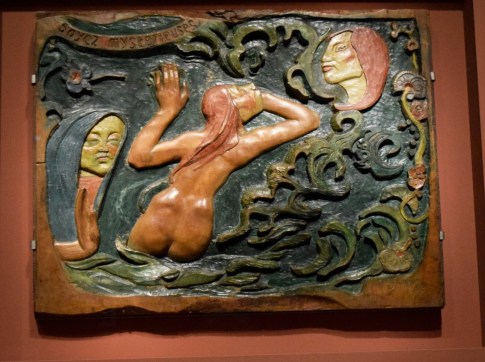
A number of the wood carvings in the exhibition were flat, including some that were applied to pieces of furniture. We were impressed with the way Gauguin married the finished carving with the rough texture of the original wood.
I also think it’s interesting that this piece and the one below both feature figures similar to many of his south seas paintings, but in the carving, below, he has added color.
In addition to working with wood, Gauguin also created several pieces of pottery, though not all remain due to the fragile nature of the material. Doesn’t the design on this bowl reflect the colors and designs in his paintings?
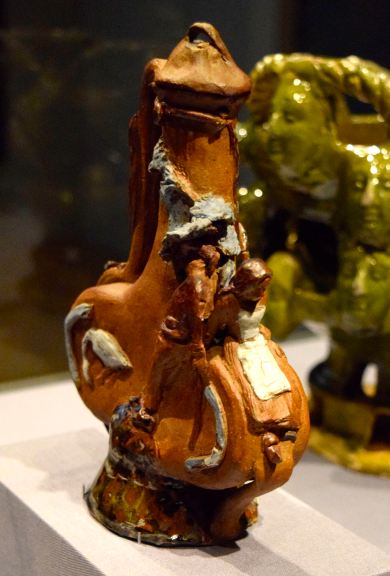
This smaller vessel with added decoration and figures and all done in a free-form manner is representative of a number of ceramic pieces in the exhibition. The amount of color and detail he added is also reminiscent of many of his paintings.
Regrettably, I did not capture images of his printmaking. I really got caught up in the processes he used. Typically woodblock or woodcut prints are made to create identical copies of a single design. However, in Gauguin’s hands process was different. He purposely tweaked each print, with a wash of color, with different papers and inks. In many cases the prints were displayed as progressions of a design, but not duplicates. Still searching for a better expression.
Steve and I were both struck by how much more Gauguin did than his paintings and about how much more there is to his artistic vision. He tested, experimented, and tried new mediums, always searching for a better way to express himself.
When you think about it, challenging ourselves to progress — in our work, our art, our life — is pretty essential. In this “back to class” season, what are you challenging yourself to do?
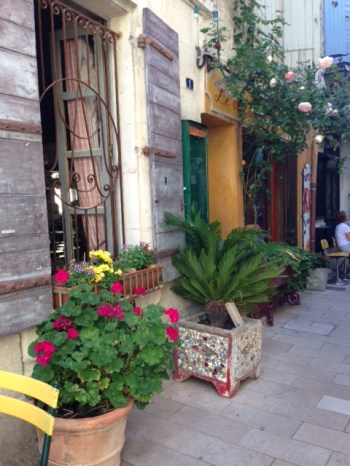
St. Remy, Provence, where every doorway is decked out with flowers and/or greenery and/or cafe tables.
I could not wait to plunge into our recent travels in France to tell you about Castle Sercy, here, and my day at The Cook’s Atelier, here. But then I thought I should backtrack and give you a look at our trip overall. It was more than castles and cooking.
A few years ago we took a river cruise in France that traveled north from Arles in Provence to Salon sur Saone in Burgundy. We had a wonderful time, we just didn’t have enough time in many of the places we stopped. There were other sights like the Pont du Gard, and towns, like Aix en Provence, along the way, that we never got a chance to see.
We knew we would go back — soon. Then my son introduced me to Ina Caro’s book, Paris to the Past, in which Caro and her husband retraced French history by daytripping via train from Paris to various cathedrals and castles. They did this in chronological order starting with the oldest sight. Since we had already visited Notre Dame, Saint Chapelle and Chartres, I wanted to visit a few more sights on the list.
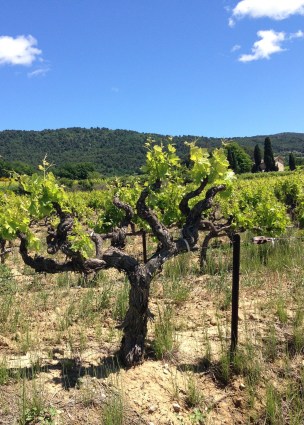
Somewhere on the road from Burgundy to Provence, stopping yet again to re-calibrate Google maps, but just look at these vines!
Burgundy is home to countless small wineries that we could only sample by visiting ourselves, and Steve was eager to do that. I had discovered The Cook’s Atelier in Beaune (a town we loved on our first visit) and was determined to attend one of their daylong cooking classes. If we started in Reims, we could visit the cathedral where centuries of French kings were crowned.
After a few days in Burgundy, we planned to drive south to Provence, exploring more hilltop towns, visiting markets, and, yes, getting lost on more back roads, before dropping the car off in Avignon and taking the train to Paris.
Our travel misadventure adventure begins
We flew into Paris and, on a chilly, drizzly morning with virtually no sleep on the overnight flight, proceeded to drive to Reims in our rented Renault Clio. We paid extra for a GPS system, but never really figured out how to use it, which explains how we ended up heading towards Paris instead of Reims. Fortunately, even my seriously limited French revealed we were going in the wrong direction. Pull over, pull up Google maps, and recalibrate. (This is a little jingle we would oft repeat!)
Here’s what we learned about driving in France: In addition to being in French, the road signs did not indicate direction. Alas, we midwesterners are used to I80 West, I65 North and so on. Not so in France. Keep your eye on the Google map. And here’s what we learned about roundabouts: keep going around until you are sure of the exit you want to take. If you make the wrong assumption and take the wrong roundabout turn off, you can go many kilometers before getting a chance to turn around on these narrow country roads. Tollroads are nice, but not typically very close to the towns you really want to see. (And the country roads are indescribably scenic and fun to travel!)
The day we arrived in Reims was the annual celebration of Joan of Arc’s arrival there with the young Charles II for his coronation. (This cathedral was the sight of French coronations for hundreds of years.) It made visiting the cathedral a little challenging, however you could not help but be charmed by the locals dressed in medieval garb and recreating processions through the town.
After our stop in Reims and catching up on our sleep at a hotel in Troyes, we visited the Abbey of Fontenay on our way to Beaune. Founded in 1118 by Saint Bernard as a Cistercian abbey, Fontenay is one of the oldest in Europe. Cistercians vow to live a simple life in poverty. Their monasteries were self-sufficient. By 1200 the monastery was complete and able to serve as many as 300 monks. Despite its initial success, the abbey was attacked and pillaged in the Hundred Years’ War and the Wars of Religion. The monks left during the revolution and the property was turned into a paper mill by the Montgolfier family (of balloon fame). Today it is privately owned. It became a UNESCO World Heritage Site in 1981.
Abbey Fontenay lived up to the Cistercian principles of simplicity, but did so elegantly.
True to the abbey’s orders, the buildings are remarkably simple, sometimes even stark, but they feature beautifully vaulted ceilings and generous doses of graceful symmetry.
On to Beaune, the wine capital of Burgundy in eastern France. It is also home to the Hotel Dieu, a 15th-century former hospital that is now a Museum. We had toured the Hotel Dieu on our first visit (an intriguing sight), but we were anxious to explore the town, sample the legendary wines, and I would spend a day cooking.
Pommard includes two chateaux, the first built in 1726 by a member of Louis IV’s court. The French Revolution forced the Marey-Mogne to sell the chateau, though they retained the vineyards (known as clos because they are enclosed by stone walls) during their exile from France. After the revolution, the family built a second chateau. Eventually both chateaux and the Clos were united under single ownership.
As we explored Beaune on foot on the day before my cooking class, we stopped by The Cook’s Atelier to introduce ourselves. My husband asked about nearby wineries and Marjorie’s son-in-law graciously arranged for us to visit Chateau Pommard, one of the oldest in Burgundy and just a handful of miles away. (And, yet we got ridiculously lost in this tiny town, so much so that we had to call the Chateau and say “this is where we think we are, how do we find you?”)
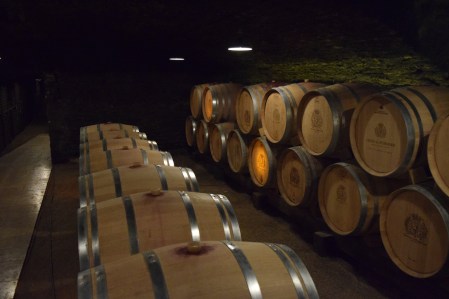
Although the estate changed hands a few more times and is now owned by an American, it has remained complete and has benefited from significant improvements to the estate management and the winemaking. Pommard wines are known worldwide for their quality, and the tour and tasting was simply wonderful.
The vineyards, top, and the cellars, above, have changed little in over two hundred years.
By now we were becoming more comfortable with driving in France. We still got lost (often!), but we took it in stride and felt free to stop, take pictures and make impromptu changes to our so-called itinerary. This is what we were hoping for!
When we left Castle Sercy, M. de Contenson suggested we stop at nearly Cormatin, a largely restored chateau, an unscheduled but memorable stop and a testament to the challenges of restoration.It took a while to realize that the small bursts of red along the roadside were wild poppies. Beautiful!
Now we know why everyone loves Provence…
It’s easy to forget that this part of France was once part of the Roman Empire and the Romans were amazing engineers. The Pont du Gard was part of a sophisticated aqueduct delivering water to a number of Roman towns.
Before we knew it the road from Burgundy led to Provence where we finally saw the Pont du Gard, visited Aix, and fell in love with French markets. Provence is absolutely charming and prettier in person that any picture. Really. We just let it unfold in front of us as we traveled.
Unlike a few other towns, the day we happened upon Seguret, the town was very quiet, encouraging us to walk its cobbled streets.
One of the charms of driving on our own was the freedom to stop and explore, as we did here at Seguret, stopping for a leisurely lunch in an outdoor cafe overlooking the French countryside.
Our plan was to stay in L’Isle sur la Sorgue for a few days (so we could attend their big Sunday market which includes antiques) and then move on to St. Remy. Both towns provided a great base from which to visit other hill towns. (And we did a lot.)
L’Isle sur la Sorgue is larger and has a working class vibe. The town owes its early prosperity to the Sorgue River, which served it well defensively centuries ago, and for the industry and trade the river offered. A number of working waterwheels remain in the heart of town
Today it’s home to many antique stores, typically only open on the weekend for the market (though I’m sure they do considerable private business the rest of the time). In the few days we were there, the people and pace seemed to pick up in anticipation of the Sunday market. We stayed a few miles from town and the hotel advised us to arrive in town on Sunday well before the market opened to assure parking. We did, though parking proved not to be a problem (or maybe we were just really early). So, we grabbed cafes and croissants from a boulangerie and enjoyed the activity as the vendors set up their wares.
I was especially eager to see what the antique dealers would offer and was not at all disappointed. There were linens, dishes, knickknacks, books, paintings and prints, and furniture, some of it just barely vintage but much of it centuries old. Centuries! I think the prices were fair and dealers were willing to bargain, I just had no idea how to get a lot of it home in a suitcase!
Stacks of china!
Something for everyone here.Tables of Majolica. Where to begin?
As much fun as the markets and specific sites were, driving almost daily through the French country side was just as much fun.
Rousillon is postcard-pretty and immediately recognizable for its ochre-colored clay, which nets the ochre pigment so popular with artists.
When we moved on to St. Remy I was reminded of the visit we paid a few years ago to the nearby Asylum of Saint Paul Mausole where Vincent Van Gogh went to recover his health; he improved here, and enjoyed an especially productive period, completing almost 150 paintings and a number of drawings from May 1889 until May 1890. (You may can read my post on that here.) One of the disappointments in the last visit was not spending time in St. Remy. This time we stayed in a charming, old hotel on the square. (In France, old means no elevator. We counted 69 steps to our room!)
A St. Remy doorway: flowers, shutters, stone.
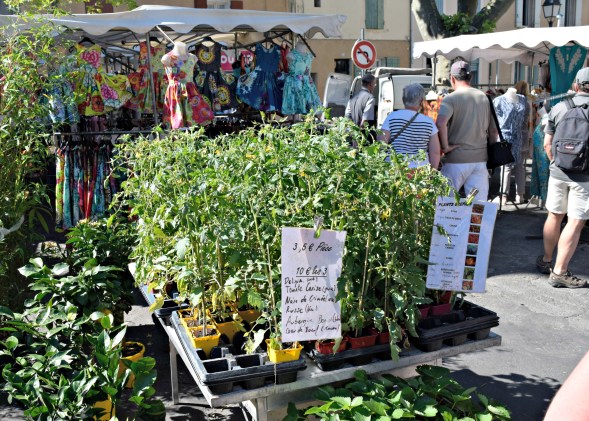
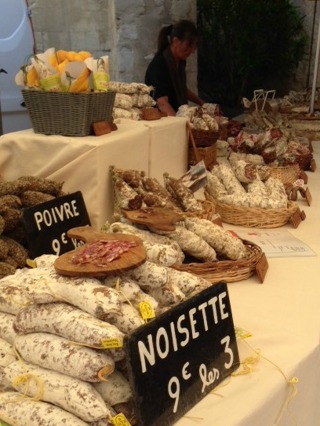
We loved the weekly market in St. Remy. Like the others it was a colorful mix of fruit, vegetables, sausage, cheese, spices, baskets, t-shirts, linen towels, handmade soap, and local artists. And I’ve probably left out a few categories. Despite the obvious merchandise aimed at tourists, it’s important to remember that most French residents shop these markets weekly for food and to catch up with neighbors. It’s very much a part of the culture.
No French market is complete without fresh herbs and a few vegetable plants.Sausages are a regular component of the French menu. Here is a market day sampling.
One of the side-trips we took from St. Remy was to Aix en Provence, a scenic drive on a warm day. I expected Aix to be pretty (and it was) and knew it played a role in the art community (you’ll see that), but we were totally unprepared for how big and bustling it was, especially on its market day (unplanned on our part). The traffic was like rush-hour gridlock. We worked our way towards Paul Cezanne’s studio, found parking in a nearby hospital lot, and walked the rest of the way.
The studio was so worth it. Cezanne had many studios over the course of his career, but this was his last and he had it built to his own specifications, a small, two-story structure on a hill in what was then the outskirts of town. The painting studio, above, was on the second floor, and though he worked every day, he often left the studio and worked outdoors. In October 1906 Cezanne was working outside the studio when the weather turned stormy. He worked for awhile anyway, then decided to go home. Unfortunately, the artist collapsed along the way. A passing driver took him home. He died of pneumonia a few days later. After his death, the Cezanne family simply locked up his studio. After a time the building was sold to a writer, who only used the first floor, leaving all of Cezanne’s art materials undisturbed upstairs. Eventually, Aix grew, and the structure was scheduled for demolition and redevelopment. A group of Americans banded together and saved Cezanne’s studio, donating it as a museum to a local university. The easels, paints, palettes, props, coffee cups – everything in the studio – are as Cezanne left them. Amazing!
So many pictures, so little time. I could not resist adding this shot of a road leading out of St. Remy, perfectly lined with clipped plane trees, a familiar sight in Provence.
After our stay in St. Remy, we dropped our car off in Avignon and took the train to Paris for our last few nights in France. I’ll post about that later. We have been to Paris a number of times, so this was more relaxed than earlier visits, seeing a few sights, shopping a little and enjoying French cafes.
Thanks for stopping by and reading and — hopefully enjoying — this loooong post. See you next time!
PS: I love Instagram and post there often. Follow me here.
Sometimes it’s the bits and pieces and not the “big picture” that capture my attention. Here are a few things that caught my eye this week.
An artist to watch
This past Sunday Steve and I headed downtown to meet some friends at the Millennium Art Show (which was really an excuse to catch up, walk around bit and then grab something to eat.) This was a small show but with some really interesting pieces and I’m sorry I didn’t spend more time seriously looking at the works displayed. Hmmm, perhaps we were chatting more than looking? However, I did enjoy re-discovering Daniel Lai.
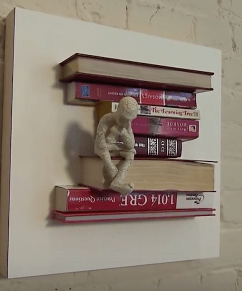
This piece by Daniel Lai is called “Teach a Man to Fish.”
Lai is a Tennessee artist who enjoys sculpting and repurposing books into the most amazing pieces of art. I first saw his work at the Wells Gallery at the Sanctuary on Kiawah Island. His work is so distinctive that I immediately recognized him at the show on Sunday. He says he started playing with books as a bored student, then was encouraged to re-purpose some of a friend’s books. I’m charmed by his imagination, the many ways he uses books and pages, those wonderful clay figures and the little extras, like the fishing pole. I think his work is both whimsical and provocative. What about you?
I captured the images, above, of his work from screen shots on You Tube. I wanted to share a few more images of his work and my photos just didn’t do it justice.
Three links to visit
I have been known do lots of blog-reading and coffee-drinking in the morning. Last week I was giving myself a real break after several especially busy days. And here’s the fun, my email inbox was full of links to some great blog posts.
Karianne at Thistlewoodfarms always has a fun take on life (she’s also a wonderful photographer and shares amazing DIY projects). She did a great post on 5-minute cleaning tips. I loved this, because she mentioned the messes that you (or at least I) forget about (like Cheerios in the silverware drawer). I also love the idea of limiting cleaning chores to 5 minutes. Click here for her tips, and if you have a 5-minute tip, please share!
This is just a sample of Jackye Lanham’s work that I found on the web.
Joni Webb at Cote de Texas did yet another of her beautiful, well-researched and illustrated posts, this time on designer Jackye Lanham and her home in Charleston, SC. First, Ms. Lanham does beautiful work: elegant, traditional rooms, minus the do-not-touch museum look. You would like to live in her rooms and her Charleston house, well, just take a look at the post! This is pure eye-candy. Pour a cup of coffee and just enjoy. (Joni’s posts are always a mini-course in art, architecture and design. She did a remarkable post on the real homes and rooms behind The Crown.)
Finally, Elizabeth at Blue and White Home, has a wonderfully clean, easy, mostly-traditional-but-sometimes-modern aesthetic (she’s also a Chicago designer, yay!). One of her recent posts turns that look onto some floral arrangements she made from blooms in her parent’s Vermont garden. They are simple, unpretentious, infinitely doable and most of all really pretty. It’s one thing to go to the store for a few bunches of flowers and greenery (we all do it all the time), but quite another to create such pretty pieces from what we have growing in the yard. Check them out.
The “stars” in my garden
My garden has a few spectacular successes this year, as well as a few failures. I don’t know if it’s the weather or, more likely, my not-so-green thumb. However, I walk the garden daily, sometimes taking pictures, often cutting some blooms to bring inside, pulling assorted weeds and dead-heading spent flowers. Not surprisingly, the stars of this year’s garden are the daylilies, and these purple coneflowers that are popping up everywhere. Take a look:
I hope you’re finding some “fun stuff” in your inbox and enjoying these July days!
We have not seen the sun here in Chicago for 10 or 12 days. It’s getting old. Really old.
It hasn’t been “Chicago cold” (sub-zero or at most in the teens) and there is no snow. And while I certainly don’t bemoan the absence of cold and snow, they at least provide a little drama. This is just bleak, damp, often rainy, and gray. Very, very gray.
What have I been up to, besides complaining?
Last week one of my oldest friends, one I never get to see enough of, suggested we meet in Elmhurst (another Chicago suburb) to check out exhibits at the local art museum and historical society. What a great day she planned for us!
The art museum is connected to the Mies van der Rohe McCormick House (one of only three houses that he built in the United States) which it acquired some time ago. The pairing of the house with the museum reflects the museum’s philosophy that “people from all walks of life and professions can learn how to see and to think differently through the study of art, architecture and design.”
The exhibit we saw is called “Sense of Place,” and it’s designed to consider the various ways we “map the places of our lives.” It also celebrates the museum’s 20th anniversary by recognizing its founding artists. I have to say, Laura and I were both (a) impressed by the museum and (b) taken aback by the opening gallery in this exhibit, a residential room, completely washed in white paint — chairs, sofa, tables, lamps, books. And it invited visitors to leave their mark, so to speak, using available crayons or colored pencils, to doodle, scribble, whatever. (Mine is at the start of this post.)
Since the exhibition opened in December, it was already heavily doodled. In fact, finding a blank space for our own doodles was tricky. And I honestly don’t know which I found more unnerving, the totally white background or the scribbles everywhere. What do you think? (This was called Welcome Home Coloring Book, by Donna Castellanos, mixed media, colored pencils, salvaged furnishings.) I think initially at least Laura and I both started channeling our mother/grandmother selves, “you wrote on what?”
The exhibit as a whole (it included 39 artists, some with more than one work) offered a genuinely diverse view of “Sense of Place,” everything from video to collage to oil on canvas. (And this is where I wish I’d taken more photos, but I just got caught up in looking! And I have to apologize for what I do have here, it’s pretty paltry.)
We both loved this oil on canvas, Best Medicine, by Cassandra Swierenga. Did we like it because it was a familiar medium, great color, a happy, loving moment between a mother and three daughters? Probably all of the above. It seems reminiscent of a time and place you have experienced and hope to again.
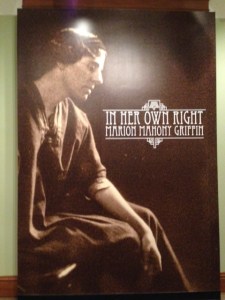
After the art museum, we stopped for lunch at a wonderful restaurant, then walked over to the Elmhurst History Museum to acquaint ourselves with Marion Mahony Griffin (1871-1961), one of the country’s first female architects and a central figure in the Prairie School of Architecture. It’s impossible to overlook the impact of architecture on Chicago, particularly the Prairie School and Frank Lloyd Wright, but Marion Mahony Griffon was a revelation to us.
Marion Mahony was Wright’s first employee and a key member of his Oak Park Studio for 15 years, but her work, as well as that of others in the studio was downplayed by Wright. Interestingly, her senior project at MIT was the design for this home and studio. If you visit the Wright home and studio in Oak Park, built somewhat later, it’s impossible to ignore the similarities.
Architectural historians believe that Mahony’s distinctively-styled renderings, which share many similarities with Japanese woodblock prints, contributed significantly to the Prairie School style of architecture, landscape and design.
According to Wikipedia, when Wright left his first wife and fled to Europe with his second in 1909, he offered the Studio’s commissions to Mahony. Although she declined, she was subsequently hired by Hermann V. von Holst, who had accepted the work. In this capacity, she retained design control and was the architect for a number of commissions Wright had abandoned. She eventually partnered with Walter Burley Griffin on a number of projects. Mahony and Griffin married in 191l, eventually taking their prairie style to projects in India and Australia. After Griffin’s death in 1937, she completed their unfinished commissions but did little more to further her own career.
In so many ways, it seems, Marion Mahony Griffin’s talent was co-opted by the men around her. And that’s a familiar story. I’m so glad we “discovered” her!




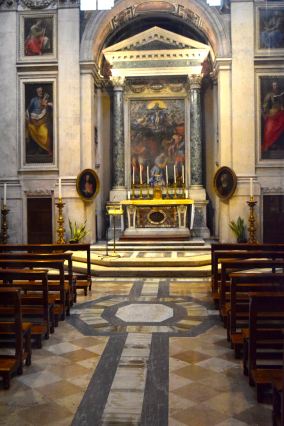 and St. John Lateran, so we decided to visit at least one more and Santa Maria Maggiore looked like it was within walking distance of our hotel.

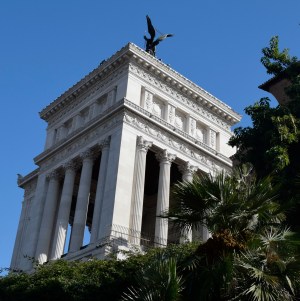 Taking a museum break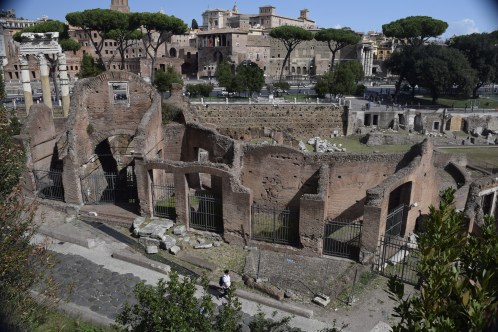

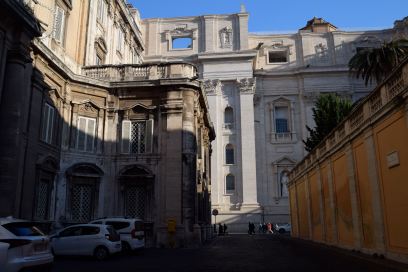 On our last day in Rome we went to the Vatican for a tour of St. Peter’s and the mosaic studios. (And you thought we were done with churches!) We had toured the Vatican museums and the Sistine Chapel, ending with St. Peter’s, last year. But that tour happened to fall on a national holiday and coincided with a special Papal audience. We were shoulder-to-shoulder with other visitors the entire time.
 In order to perfectly repair the Vatican mosaics the space also accommodates a mosaic library of the stones and colors used in all its artworks. These archives are stunning in both their simplicity and their extent. We were also allowed into another work space housing a small kiln where artists can fire the exact color necessary to complete a new work. There is no part of the mosaic process that is not painstakingly created and/or cared for. And of course, care is evident in every piece the studio creates. I’m not an artist, but I do like to understand the process behind art and this was a remarkable lesson.
 Sure there were hundreds of others in the the basilica (in fact a group of seminarians was being ordained at the very front), but it felt like it was just us and our guide. Our guide walked us through several pieces, explaining the meaning and symbolism in each mosaic. We also visited the crypt to see where previous popes are buried. I must admit that although we are not catholic, it was amazing to see names recent and historic on tomb after tomb. (Many of the earliest tombs were destroyed long ago.)



 My husband and I loved the idea of these hidden doors. If you have read Dan Brown’s Inferno, or seen the Tom Hanks movie, you undoubtedly recall the crazy chase thru the Palazzo Vecchio. Remember the scene above the ceiling of the Hall of 500? After climbing dozens of narrow stairs, we were up in a corner of it. The space was more cramped than it appeared in the movie, but still very cool to see how the Renaissance building was assembled. Alternating rafters support the roof above and/or hold the ceiling below. What genius Renaissance architects displayed!
 Whew! This is not all that we saw or did in Florence, but it gives you a good idea of how we spent our second visit in as many years. We enjoyed the fact that the city was somewhat familiar, we stayed in the same hotel (because we really love it!) and even ate at a restaurant we enjoyed last year. We also found some great new places. We ate lunch one day at the bustling the Central Market and I spent an afternoon at the Bargello. We spent a morning at the Pitti Palace (more Medicis) and found time to explore the tiny streets of the Oltarno. I think this second visit allowed us to “peel back another layer” on all there is to see in Florence.
 So, I have been thinking about the pictures of our life lately.
 As I was flipping through a week’s worth of photos, I was thinking about how they capture life. We all get cameras (or phones!) out for the big moments: birthdays, anniversaries, graduations, etc. And then there are the vacation photos: the beach, the mountains or even the backyard. But lately I’m thinking about daily life, like this photo of construction at Madison St. and Wabash Ave. My challenge is to capture that.
 Most of us think of Paul Gauguin as the painter of vibrant and exotic scenes like “Tahitian Women on the Beach.” But this exhibition took a much closer look at his creative process, especially his ceramics and wood carvings. (I know, who knew he even worked in these mediums?)










 Finally, Elizabeth at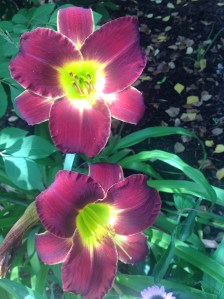


 Last week one of my oldest friends, one I never get to see enough of, suggested we meet in Elmhurst (another Chicago suburb) to check out exhibits at the local art museum and historical society. What a great day she planned for us!

 We both loved this oil on canvas, Best Medicine, by Cassandra Swierenga. Did we like it because it was a familiar medium, great color, a happy, loving moment between a mother and three daughters? Probably all of the above. It seems reminiscent of a time and place you have experienced and hope to again.
 After the art museum, we stopped for lunch at a wonderful restaurant, then walked over to the Elmhurst History Museum to acquaint ourselves with Marion Mahony Griffin (1871-1961), one of the country’s first female architects and a central figure in the Prairie School of Architecture. It’s impossible to overlook the impact of architecture on Chicago, particularly the Prairie School and Frank Lloyd Wright, but Marion Mahony Griffon was a revelation to us.
 Ivy & Ironstone