 Hi. Before I say another word, I need to apologize for my last post. “Good Stuff” probably arrived in your inbox riddled with typos and crazy mixed up type. I can’t believe this happened, but I hit publish instead of review. And out it went. I’m so embarrassed. I realized my mistake immediately, but it was too late. I did clean up the mess on my website, so if you read the post at ivyandironstone.com, you saw the corrected version.
On with today’s post. I’m so excited to share this.
Earlier this week I met two of my best-ever friends (the kind from the first day of high school!) downtown at Chicago’s Art Institute. Our goal was to see the Obama presidential portraits and then hopefully take in another exhibit on quilts. It turned out to be quite a day.
The Obama portraits were more interesting in person that we expected. Like us, you have probably already seen them in the media. They are not typical presidential portraits. The artists — Kehinde Wiley for former President Barrack Obama and Amy Sherald for former First Lady Michele Obama — are the first African Americans commissioned by the National Portrait Gallery to create official portraits of a president or first lady.
Mr. Obama’s pose was familiar — seated, leaning forward with his elbows on his knees, as if he’s ready to engage with the viewer. The portrait is really large, commanding even, and maybe a little imposing. I’ve been curious about the leafy background since the painting was revealed. The artist used it to work in flowers representative of places in the president’s life, including Chicago, Hawaii, and his father’s native Africa.

Mrs. Obama’s portrait is also non-traditional. I imagine most viewers are initially struck by her gray skin, a trademark of the artist. According to the Art Institute, Sherald does this “as a nod to these historical photographs and a reminder of the relative absence of African Americans in the history of painted portraits, but also to relieve her subjects from the internal and external limits imposed by the construct of race.” Interesting, huh? The hair, the expression, and the African-inspired fabric of her dress are all very much Michelle Obama. And purposeful. Interestingly, the background on her portrait is just blue. The blank but colorful background is another hallmark of artist Sherald.

Chicago was just the first stop for these portraits. They’re traveling on to the Brooklyn Museum, Los Angeles County Museum of Art, High Museum of Art, and the Museum of Fine Arts, Houston.
Bisa Butler’s portrait quilts
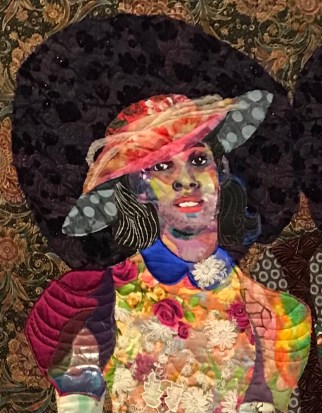
I’m not sure what we expected from this exhibit, but it wasn’t close to as extraordinary as these quilts proved to be. Artist Bisa Butler constructs her quilt portraits from bits and pieces of fabric, from the finest details of a facial expression to the puffiest sleeve on a dress. I tried to show some of the detail in the first photo, above.
Although each work is strictly fabric, she approaches each piece as she would a painting, often working from a found photograph and selecting fabrics as an artist selects paint pigments. Butler incorporates kente cloth and wax-printed African fabrics in her quilts, using bright jewel tones rather than more traditional shades to depict skin tones. She believes this conveys the emotions of her subjects —who may be everyday people or historical figures. Look at the range of expression on the faces of the children in this quilt, Safety Patrol, which opened the exhibit (and knocked our socks off from the start.).

This quilt is based on an old photograph. The tulle on the hats is a three-dimensional addition. I love how naturally the women are posed.

We were struck by the detail on the mother’s dress. Once again, the pose is so natural. Look st Dad, holding his daughter still.

I love the fabric layering and detail in each quilt and the remarkably life-like poses. (Look at the feet in each quilt!) I have always considered quilting as a precious part of our American heritage: a necessity for frugal homemakers to use what they had and an evolving craft reflecting historical moments as well as an art form. Bisa Butler’s work redefines the medium. I’ve spent a lot of time studying these images, trying to grasp both her vision as she approaches each quilt and then the skill and artistry to select and assemble the fabrics.
That’s all I have right now. I hope you are having a good week. Thanks for stopping by and I’ll see you again soon.
 I had planned to talk about the to-be-read and to-be-cooked lists I’ve been compiling for the new year, along with a few stabs I’ve made at de-cluttering and the other ways in which I was planning to entertain myself while we wait out the pandemic. (In the county were I live the Health Department describes the risk of infection as “substantial.” I don’t know what that means but it doesn’t sound good, does it?

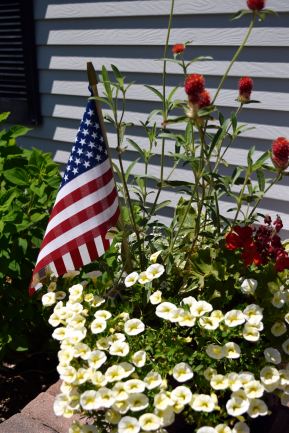 My grandfather was a WWI veteran and a founding member of the William McKinley American Legion Post in Chicago. When he died in 1988, his friends from the post showed up to honor him as pallbearers. When the minister had finished his blessing at the cemetery and was about to send the mourners to lunch, one of the legion members, a little white-haired man (in his nineties I imagine, as Grandpa had been) with his legion cap at a rakish angle, stepped forwarded and admonished the minister to “Hold on sonny.” Then he produced a tape player, pushed a button, and played Taps. (And we all cried a little more. )
 I have always had mixed feelings about August. On the one hand, summer’s winding down, the beach is behind us, my husband’s hay fever settles in for a week or two of misery for him. On the other hand, there are all the new pens, pencils and notebooks (I still buy a few for myself) and the prospect of a fresh start. Here are a few August 2020 ups & downs.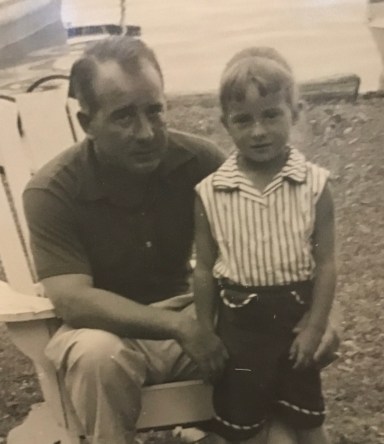
 And why am I on this vocabulary quest? Two words: my Dad. He was an ad man long before I was ever a writer or editor. He loved language and finding new words. His pithiest writing advice to me was to skip the “50-cent word when a 10-center will work.” For years he wrote new words and their definitions down on 3 by 5 index cards. He did this as he read the paper, magazines, books. This drove my mother crazy. The index cards were everywhere — neatly stacked beside his empty coffee cup, falling out of sofa cushions, tucked into books and magazines. I’m sure she threw away more than half of what he wrote down, but still he collected words. Ironically, he suffered a small stroke in his late fifties that temporarily robbed him of language. He could talk but had no vocabulary. It took weeks just to get the basics back.
 I was writing a lighthearted post when the coronavirus death toll passed 100,000. And while l was trying to wrap my head around that number, one man died on the street in Minneapolis. You know the rest. These have been terrible days and weeks. I am so sad about what’s happened, but also hopeful we meet this challenge. It will take a lot of work. I especially hope you are well. Personally, I just felt numb for a while. Here’s what I’ve been doing to get back on track.
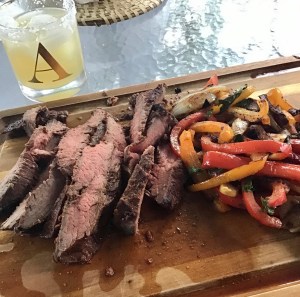 Our cooking adventures continue. Earlier this week I made steak fajitas from scratch using a recipe from the New York Times (My new favorite recipe source. I encourage you to sign up for their newsletter.). First, this recipe was much easier than I expected and required standard ingredients from my kitchen. Who knew? The fajitas tasted even better than they look. (I should have tidied that serving board before snapping any photos.)



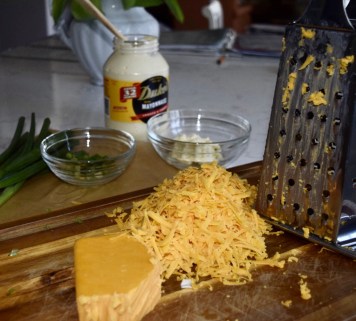 I don’t know about you but, but I’ve really needed to take a step back from the pandemic. Uncertainty is hard, and this is uncertainty on steroids. Not only is it reshaping our lives for the foreseeable future, but I think we can’t help but be somewhat changed when it’s over. I need a “news” break, so I’m heading for the kitchen where I think a lot of us have been hanging.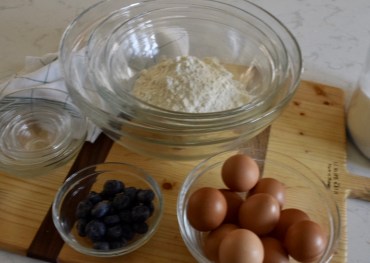


 Ivy & Ironstone